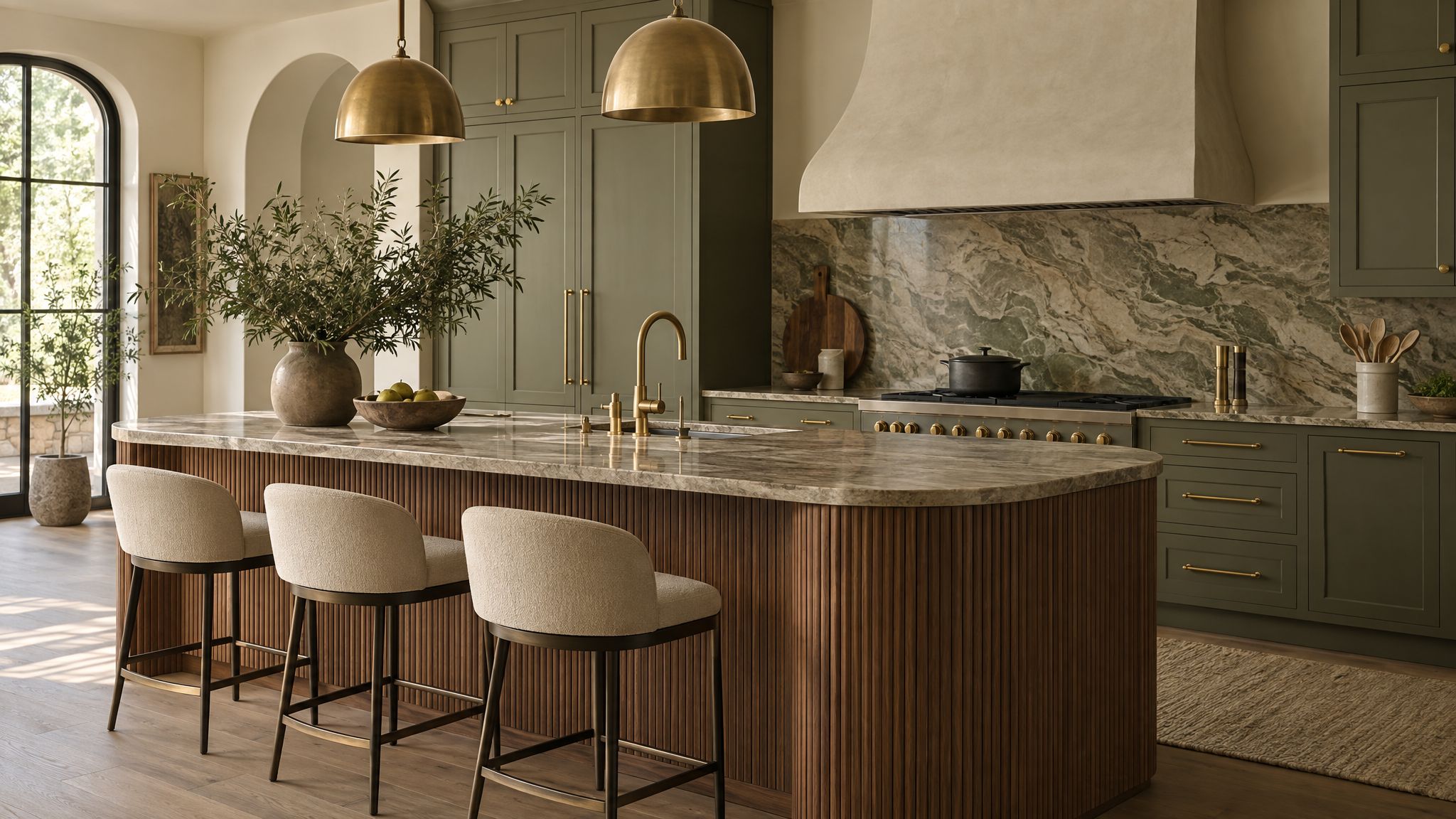
Kitchen trends move more slowly than fashion, but they do move. Over the past few years the all-white, high-contrast kitchen has given way to warmer, more textured and more personal spaces. Heading into 2026, the shifts we see in our shop, in designers' drawings and in what clients bring to consultations point in a clear direction: kitchens that feel crafted, calm and connected to the rest of the house. Here are the trends shaping custom kitchen millwork now, along with our take on which have staying power.
1. Warm wood takes center stage
Natural wood has moved from accent to main event. White oak remains the most requested species, especially rift-sawn white oak for its calm, linear grain. Walnut is gaining ground for richer, moodier kitchens. Clients increasingly ask for wood on full perimeters, not just islands. Finishes lean toward natural, low-sheen looks, including hardwax oils like Rubio Monocoat. Staying power: high. Wood kitchens have been a constant for decades, and natural, unstained tones age well. See natural wood kitchen cabinets and walnut vs. white oak.
2. Earthy painted colors
When clients choose paint, they're choosing color. Olive and sage greens, mushroom and taupe, warm greige, terracotta, and deep inky blues have replaced cool grey. Two-tone schemes, such as painted perimeters with a wood island, remain strong. Staying power: medium-high. Muted, earthy colors are versatile; bolder colors are easiest to update on an island. See cabinet color trends and two-tone kitchens.
3. Texture: fluting, reeding and ribbing
Fluted and reeded panels add texture to islands, hoods, end panels and drawer fronts. They catch light and bring a handcrafted quality to otherwise simple kitchens. Staying power: medium. Used sparingly, as an accent rather than everywhere, fluting is likely to age well. See fluted and reeded millwork and the fluted millwork trend.
4. Curves and softened edges
Rounded island ends, curved hoods, arched openings and radius corners soften the geometry of a kitchen. Curved millwork requires skill: bent laminations, coopered panels or CNC-shaped parts. Staying power: medium-high where curves relate to the architecture. See statement island ideas.
5. The disappearing kitchen
As kitchens open to living spaces, owners want them to look less like kitchens. Integrated appliances, appliance garages, pocket doors that hide coffee stations, and hidden pantries create calm, furniture-like walls. Staying power: high, because it's driven by how people live. See hidden pantries and appliance garages and integrated appliance kitchens.
6. Slab backsplashes and natural stone
Full-height stone backsplashes in the same slab as the counter create a seamless look. Quartzite, marble and travertine with strong veining are favored. Honed and leathered finishes are more popular than polished. Staying power: high; natural stone is timeless.
7. Warm minimalism
A quieter strand of design pares kitchens down: handleless doors, monolithic islands, limewash walls and a restrained palette of wood and stone. See our deep dive on the warm-minimalist kitchen and Japandi millwork.
8. Mixed metals and living finishes
Unlacquered brass that patinas over time, aged bronze and blackened steel appear alongside each other in hardware, lighting and plumbing. Staying power: medium-high; living finishes feel timeless because they change. See hardware finishes and brass hardware.
9. Furniture-style pieces
Islands on legs, freestanding-look hutches, glass-front display cabinets and open shelving make kitchens feel collected rather than installed. Unfitted elements also suit older homes; see pre-war co-op kitchens.
10. Scullery and back kitchens
Larger homes increasingly include a scullery or back kitchen behind the main kitchen to hide prep and cleanup. See scullery kitchen design and butler's pantries.
Trends we see fading
All-white high-gloss kitchens with cool grey accents, heavily distressed farmhouse finishes, open upper shelving across every wall, and stark black-and-white contrast are less requested. They aren't wrong, but they're no longer the default. Classic whites, however, never really leave; see why white kitchens are timeless.
How to use trends wisely
Invest in what lasts, such as construction, layout, quality hardware and natural materials, and express trends in elements that are easy to change: paint on an island, hardware, lighting and accessories. If you love a trend, commit to it with good proportions and quality execution; well-made things rarely look dated. See modern kitchen upgrades that last and cabinet finishes.
Frequently asked questions
Is white oak overdone? It's popular, but it's a classic material. Rift-sawn oak with a natural finish will look good for decades.
Are dark kitchens a trend or a classic? Dark kitchens come and go but have a long history; see dark kitchen cabinets.
What's the safest choice for resale? Natural wood, warm whites and soft neutrals with quality construction appeal broadly.
How trends show up in the shop
From a fabrication perspective, the 2026 trends share something important: they demand more craft. Sequence-matched wood veneers, curved panels, fluted fronts, flush integrated appliances and pocket-door systems all require careful engineering, accurate shop drawings and precise installation. That's good news for homeowners, because craft-driven trends tend to age better than surface-level fashions. A well-built walnut island with a softly curved end will still look intentional in twenty years; a novelty color applied to every surface may not. When you review a design, ask your millwork shop how each trend element will be built, finished and maintained. The answers will tell you a lot about both the detail and the shop. See how custom cabinets are made and veneer matching.
Bringing trends into an existing kitchen
Not ready for a full renovation? Several 2026 trends adapt well to an update. A new wood island can warm up a painted kitchen. Refinishing perimeter cabinets in an earthy color changes the mood completely. Swapping hardware for unlacquered brass or bronze adds a living finish. Adding an appliance garage or replacing a corner of uppers with a pocket-door coffee station brings in the disappearing-kitchen idea. If your cabinet boxes are sound, refacing is another option; see refacing vs. replacement.
Whatever direction you choose, the most successful kitchens start with a clear conversation about how you cook, entertain and store things, followed by careful drawings and honest advice about materials. If you'd like a second opinion on a design or a quote, we're happy to review plans and suggest where custom millwork will make the biggest difference for your home and budget.
Related reading: кухні на замовлення (Ukrainian), ремонт кухни (Russian).
Explore our custom kitchens to start your project.