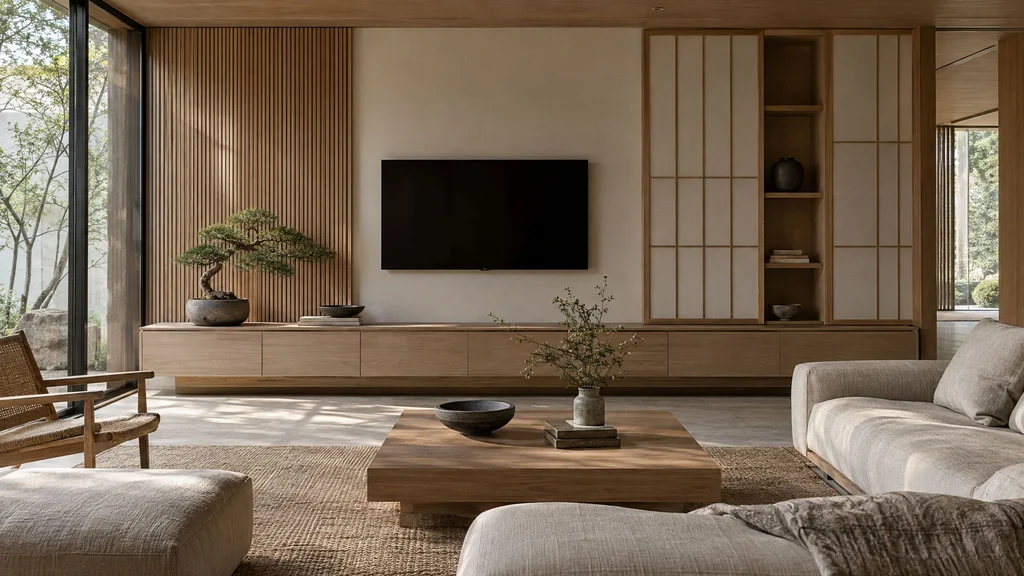
Japandi is a portmanteau of Japanese and Scandinavian, and it describes a design approach that combines the restraint, craft and reverence for natural materials found in Japanese interiors with the warmth, comfort and functionality of Scandinavian design. Both traditions value simplicity, natural light, quality materials and handcraft, which is why they blend so naturally. Japandi is especially well suited to millwork, because so much of its character comes from wood, joinery and carefully proportioned built-ins. This guide explains how to translate the Japandi philosophy into custom millwork for your home.
The principles behind Japandi
- Wabi-sabi: the Japanese appreciation of imperfection, natural aging and the beauty of simple, honest materials.
- Hygge: the Scandinavian sense of comfort, warmth and coziness.
- Functional simplicity: everything has a purpose, and clutter is hidden.
- Natural materials: wood, paper, stone, linen, wool and clay.
- Craft: visible quality in joinery, proportions and finishes.
- Connection to nature: natural light, views and organic forms.
Choosing wood species
Japandi palettes usually combine a light wood with a darker accent. Common choices include:
- Ash and white oak: pale, open-grained woods with Scandinavian roots. See rift-sawn white oak.
- Hinoki and cedar: fragrant, light Japanese woods, used for accents, bathrooms and closets.
- Walnut: a darker counterpoint for contrast. See walnut vs. white oak.
- Charred or ebonized wood: inspired by Japanese shou sugi ban, for dramatic dark accents. See also bog oak veneer.
Finishes should be natural and matte: oils, hardwax oils, or soap finishes that let the wood breathe. See Rubio Monocoat and natural wood cabinets. For understanding whether solid wood or veneer suits each piece, see wood veneer vs. solid wood.
Signature millwork elements
Slatted panels and screens
Vertical wood slats, spaced evenly, are perhaps the most recognizable Japandi element. They're used as wall cladding, room dividers, stair screens, cabinet fronts and ceiling treatments, filtering light and adding rhythm without visual weight. Slats also hide speakers, vents and lighting. See wall paneling types.
Shoji-inspired doors
Sliding doors with a fine wood grid, backed with translucent paper, fabric, or acrylic and glass, recall traditional shoji screens. They make beautiful closet doors, room dividers and cabinet fronts. See hidden door design for other ways to blend doors into walls.
Low-profile built-ins
Japanese interiors sit low. Long, low media consoles, platform beds with built-in storage and low benches create calm horizontal lines. See our media wall and living room shelving posts.
Tokonoma-style niches
A recessed display niche, inspired by the Japanese tokonoma, highlights a single object, flower arrangement or artwork. It's a simple, powerful way to add focus to a room.
Visible joinery
Japanese joinery is famous for its precision. In Japandi millwork, joints such as through-tenons, splines and finger joints can become decorative features. See CNC vs. handmade cabinetry for how modern shops combine machine precision with handwork.
Japandi kitchens
A Japandi kitchen combines flat-panel wood cabinetry, a simple stone or concrete counter, minimal or integrated hardware, open shelving for a few beautiful pieces, and plenty of hidden storage. Appliances are integrated, and colors stay muted: pale wood, soft white, charcoal and clay. It overlaps strongly with warm-minimalist kitchen design.
Japandi bathrooms
Bathrooms are a natural fit, with floating wood vanities, stone basins, cedar or hinoki accents and soft lighting. Moisture resistance matters; see best wood for bathroom vanities and spa bathroom design.
Japandi bedrooms and closets
Platform beds, wardrobe walls with sliding shoji-style or slatted doors, and simple open storage create restful bedrooms. Cedar linings in closets add fragrance; see cedar closet lining.
Color and texture
Japandi colors are earthy and muted: warm whites, sand, clay, sage, charcoal and black accents. Texture comes from wood grain, limewash, linen, stone and handmade ceramics. Avoid glossy surfaces and saturated colors.
Common mistakes
- Too many slats: used everywhere, slats lose impact. Use them where they serve a purpose.
- Cheap materials: Japandi depends on quality. Thin veneers, plastic laminates and poor finishes undermine it.
- Clutter: without generous hidden storage, the calm disappears.
- Too stark: Japandi should feel warm. Balance minimalism with soft textiles and warm light.
Frequently asked questions
Does Japandi work in a traditional New York apartment? Yes. It pairs well with pre-war architecture when proportions respect the room.
Is Japandi expensive? It relies on quality materials and precise execution, so it isn't the cheapest style, but its restraint means fewer elements overall. See architectural millwork costs.
How do I maintain oiled wood? Clean gently and re-oil periodically; oiled finishes are easy to repair locally.
Bringing Japandi into an existing home
You don't need a full renovation to bring Japandi into your home. A few millwork pieces can set the tone. Start with a low media console in ash or oak with slatted doors; it instantly changes a living room. Add a slatted wall panel behind a bed or sofa to introduce rhythm and warmth. Replace closet doors with shoji-inspired sliding panels. Build a simple bench in the entry with storage below and hooks above. In the kitchen, swap upper cabinets on one wall for a single long oak shelf and add integrated pulls to the remaining cabinetry. Each of these steps uses natural materials, simplifies the room and hides clutter, which is the heart of the style.
Working with a millwork shop on Japandi pieces
Japandi rewards precise execution. When you work with a shop, bring reference images and talk about grain direction, slat spacing, joinery details and finishes. Ask to see samples of the species and finish together, under your home's light. Discuss how slats will be attached, how sliding doors will run, and how hidden storage will open. Detailed shop drawings will show reveals, slat counts and joinery. A good shop will also advise on wood movement, since slats and solid-wood pieces must be allowed to move with the seasons without gaps or cracking.
Whatever direction you choose, the most successful kitchens start with a clear conversation about how you cook, entertain and store things, followed by careful drawings and honest advice about materials. If you'd like a second opinion on a design or a quote, we're happy to review plans and suggest where custom millwork will make the biggest difference for your home and budget.
Explore our architectural millwork and custom furniture services.