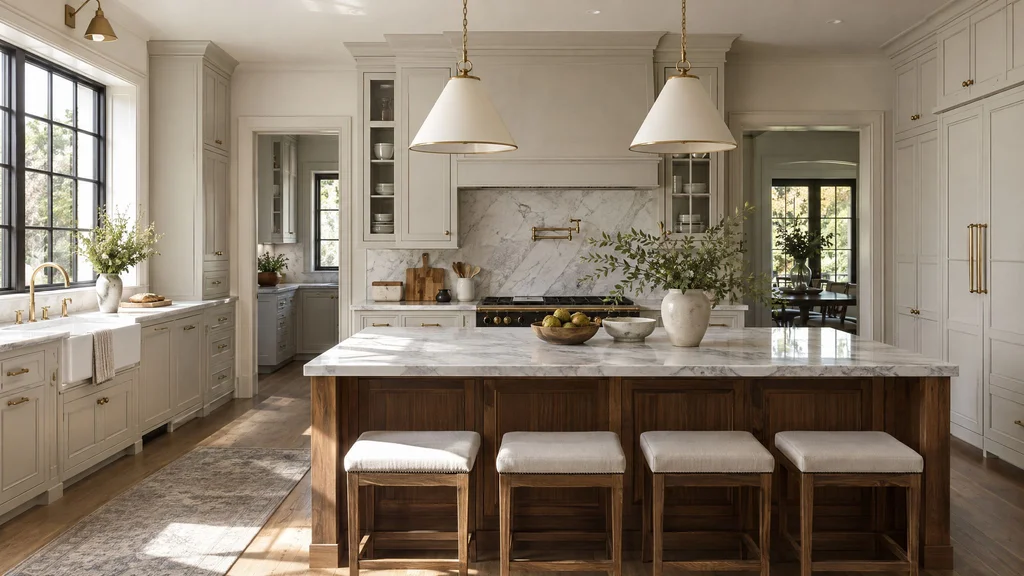
A custom kitchen is one of the most rewarding projects you can undertake in a home — and one of the most involved. Knowing what's coming at each stage makes the process calmer, helps you make decisions at the right time, and sets realistic expectations about how your household will function while it's happening. Here's what the journey looks like from our side of the workbench, from first conversation to first dinner.
Stage 1: The first conversation
It starts with a call or visit where we talk about how you cook, entertain, and live. How many people use the kitchen at once? Do you bake? Where do groceries land? What drives you crazy about your current kitchen? We'll also discuss style, materials you're drawn to, budget range, and timing. This is the moment to share inspiration images and to be honest about priorities, because every design decision flows from them.
Stage 2: Site visit and design
We visit the space, take preliminary measurements, and study how it connects to adjoining rooms, windows, and light. Then we develop a layout and elevations, often with a 3D model, so you can see proportions and flow. If you're working with a designer or architect, this is collaborative — see working with your designer on millwork. Expect a couple of rounds of revisions.
Stage 3: The decisions that come early
Some choices need to happen sooner than clients expect. Appliances are the big one: cabinetry is built around exact appliance dimensions, so models should be selected before drawings are finalized. Sinks, faucets, and major lighting follow. Door style, species, and finish direction should be settled too. Our guides to cabinet finishes and walnut vs. white oak help with the material conversation.
Stage 4: Field measure and shop drawings
Once walls are in their final position, we measure precisely — including every out-of-plumb wall and uneven floor — and produce shop drawings. We'll review them together. This is your chance to confirm drawer locations, door swings, heights, and interiors. Read how to read shop drawings before this meeting and bring questions.
Stage 5: Samples and sign-off
You'll approve physical finish samples on the real species, confirm hardware, and sign off on drawings. This approval starts production, so take your time with it. After this point, changes become significantly more complicated.
Stage 6: Fabrication — the quiet stretch
For roughly six to ten weeks, your kitchen is being built in our shop. From your perspective, not much happens — but this is where the craftsmanship lives. You're welcome to visit and see pieces in progress. We describe this stage in how custom cabinets are made. Meanwhile, if it's a renovation, your contractor is typically completing demolition, rough-in, drywall, and paint.
Stage 7: Living through the renovation
If you're staying in the home, plan for a temporary kitchen: a microwave, a coffee maker, a small refrigerator, and a utility sink or bathroom sink for washing up. Paper plates become your friends. Expect dust despite everyone's best efforts, and expect some noise. Many clients time the most disruptive weeks around a vacation. In New York City apartments, you'll also have building work-hour restrictions to consider, which can affect how long each phase takes.
Stage 8: Installation
Installation usually takes three to ten working days. Cabinets arrive protected, are set, leveled, fastened, and scribed to the walls; panels, crown, and fillers are fitted; and doors and drawers are adjusted. Then the stone fabricator templates the countertops off the installed cabinetry, which is why counters come after cabinets. Stone installation typically follows within one to three weeks, and then plumbing and appliances are connected. See inside a millwork installation.
Stage 9: Final details and punch list
After stone and appliances are in, we return for final adjustments: fine-tuning door alignment, installing any remaining hardware, and addressing punch-list items from a walkthrough. It's normal to have a short list of small items — the important thing is that they're completed promptly.
Stage 10: Living with your new kitchen
We'll explain how to care for your finish, what normal wood behavior looks like through the seasons, and how hinges can be adjusted over time. Solid wood responds to humidity — minor seasonal movement is natural, and we explain why in wood movement and custom cabinetry. We're always available if something needs attention.
How long does it all take?
From first conversation to finished kitchen, most custom kitchen projects take three to five months, depending on scope, decision-making, and site readiness. Our lead time guide breaks this down stage by stage.
Tips for a smoother project
- Choose appliances early — they drive cabinet dimensions.
- Designate one decision-maker, or agree on how joint decisions get made.
- Keep a running list of questions for each meeting.
- Visit the shop during fabrication if you can.
- Plan your temporary kitchen before demolition day.
- Budget a small contingency for the surprises every renovation holds behind its walls.
What makes it worth it
What to expect financially
Most custom kitchen projects follow a milestone payment structure: a deposit when you sign, a payment around drawing approval or the start of fabrication, another at delivery, and a final payment at completion. Knowing this in advance helps you plan cash flow across the renovation, especially if you're also paying a contractor, stone fabricator, and appliance supplier on their own schedules. Our contract guide explains what a fair schedule looks like, and our custom kitchen cost guide covers realistic budget ranges for the New York area.
And if you ever feel uncertain during the process, ask. A good shop would much rather answer a question today than fix a misunderstanding next month.
The months of planning and disruption end in a room built exactly for the way you live — every drawer in the right place, every surface chosen deliberately, every detail fitted to your walls. That's the difference a custom kitchen makes, and it lasts for decades. If you're considering a custom kitchen in New Jersey, New York City, Westchester, or Fairfield County, call us at (201) 281-1457 to start the conversation.