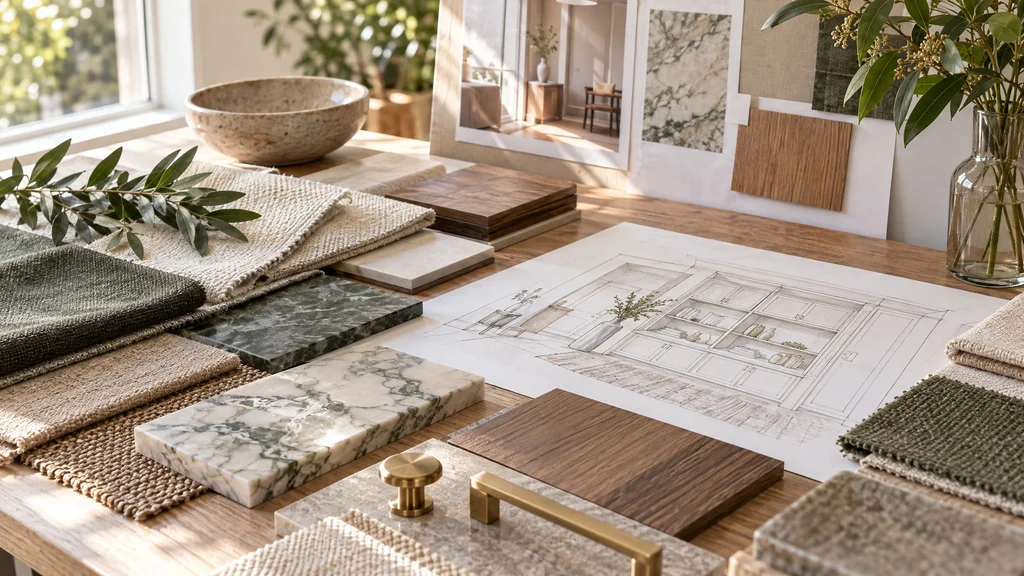
Many of our favorite projects start with a phone call from an interior designer or architect. They've developed a vision for a kitchen, a library, or an entire apartment, and they need a shop that can build it exactly as imagined. The results depend enormously on how well the designer and the millwork shop work together. After years of collaborating with designers across New York and New Jersey, here's what we've learned about making that partnership work — for designers, and for homeowners who want to understand how it all fits together.
Understanding the division of roles
The designer owns design intent: the look, proportions, materials, palette, and how the millwork relates to the rest of the space. The millwork shop owns execution: how it's constructed, how components are sized and joined, how it's finished, and how it's installed. The two overlap in the middle — which is exactly where good collaboration pays off. A shop that respects design intent while contributing practical expertise makes a designer's vision better, not just buildable.
Start early
The single best thing a designer can do is involve the millwork shop during design development rather than after drawings are "done." Early input lets us flag construction realities — panel sizes limited by material, veneer yields, hinge clearances, appliance integration — before they become design compromises. It also lets us start planning long-lead materials and production slots. See custom millwork lead times for why timing matters.
From design drawings to shop drawings
Designers typically provide elevations and key details that express intent. We translate them into shop drawings: fully dimensioned, construction-level documents. This translation is where the most important conversations happen. We'll ask questions — how a reveal should read, where a veneer seam should fall, whether a panel should return or stop — and propose solutions. The designer reviews, comments, and approves. Our guide on reading shop drawings covers what's included.
Samples, samples, samples
Finish is where design intent is most easily lost. A designer's selected color on a small chip can look completely different on a large door in a room with north light. We produce physical samples on the actual species, often at a meaningful size, and revise until the finish matches the vision. For custom colors, matching to a fabric, stone, or existing finish, see custom stain matching. When veneer is involved, we can review flitches together so the grain character is exactly right — see veneer matching explained.
Value engineering without losing the design
Budgets sometimes require adjustments. The worst version of value engineering strips out the details that made the design special. The best version finds savings the eye won't notice: a less expensive substrate behind a veneered face, a simpler interior finish, standardized box sizes where they don't affect the elevation, or a paint-grade material in a location that doesn't need stain-grade wood. A good shop proposes options and explains their trade-offs, then lets the designer decide.
Coordinating with the rest of the project
Designers juggle many trades. Millwork intersects with lighting, electrical, HVAC, plumbing, stone, and flooring. We provide rough-in and blocking information early and coordinate with the contractor so that a cove light lands exactly in its reveal and a vent grille aligns with a panel joint. When a general contractor is involved, clear lines of responsibility matter — we discuss the options in millwork shops vs. general contractors.
Communication that works
- One point of contact on each side keeps decisions clear.
- Written confirmation of decisions — even a short email — prevents misunderstandings.
- Marked-up drawings are more precise than verbal comments.
- Regular check-ins during fabrication catch questions before they become problems.
Shop visits
We encourage designers to visit during fabrication. Seeing pieces in progress — a dry-fitted run, a finished panel under real light, a veneer layout — lets small adjustments happen when they're still easy. Many designers bring clients along, which helps homeowners appreciate the craft behind what they're buying.
On site
During installation, we work closely with the designer on final details: hardware placement, alignment with other finishes, and the small judgment calls that happen in every real room. Our article on the installation process shows what happens on site.
For homeowners working with a designer
If you've hired a designer, you'll typically see the millwork shop's drawings and samples through them. Ask to be included in key reviews — especially finish samples — and feel free to visit the shop. A collaborative team welcomes the homeowner's input; it's your home.
What designers tell us they value
When we ask designers why they come back, the answers are consistent: drawings that are accurate and thorough, honest proactive communication, finish samples that match, installations that don't require the designer to babysit, and a shop that treats their design as something to protect rather than simplify. That's the standard we hold ourselves to.
A note on trade relationships
We work with designers in whatever structure fits their practice — directly for the client, through the designer, or alongside a general contractor. What matters is clarity about who approves what and who is responsible for each part of the work.
Mock-ups for signature pieces
For truly important elements — a sculptural island, a curved reception desk, a fluted wall — a full-size mock-up or a finished sample section can be worth its cost many times over. It lets the designer and client see scale, profile, and finish in real light before committing to the full piece, and it often surfaces small refinements that make the finished work sing. We recommend mock-ups whenever a detail is new, unusual, or central to the room's design.
After the install
The relationship doesn't end at installation. We return after the first heating season to adjust doors and check how the finish and wood are settling in, and we're available for the designer's photography day to make sure everything is perfect. Those final touches are what designers remember when the next project comes along.
If you're a designer or architect looking for a fabrication partner for architectural millwork, kitchens, closets, or custom furniture in the tri-state area, we'd love to talk. Call (201) 281-1457 or visit our shop in Little Falls.