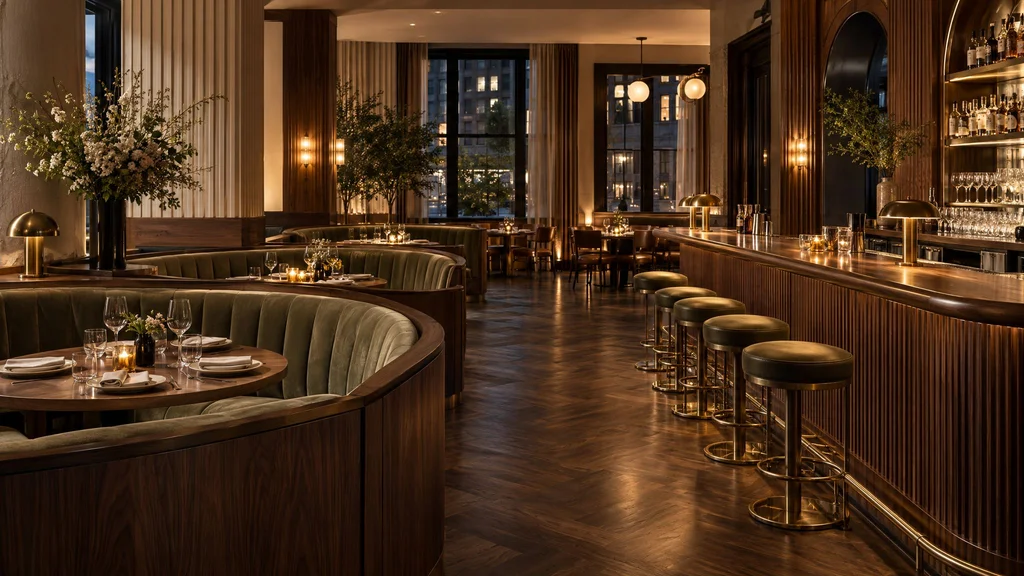
A restaurant's millwork does more than look good. It defines the atmosphere guests remember, organizes how staff move during a busy service, and has to survive years of spills, impacts, cleaning, and constant use. Getting it right requires the eye of a residential craftsman and the durability standards of commercial construction. Here's our guide to restaurant millwork, from banquettes to back bars.
Banquettes
Banquettes are the backbone of many dining rooms. They maximize seating along walls, create intimate zones, and set the tone of the room. Key considerations include seat height and depth coordinated with table heights, comfortable back angles, durable upholstery, and a solid structure that withstands constant use. Curved banquettes create memorable corners and booths but require precise fabrication. Integrated lighting, wood frames, and paneled backs elevate the look.
Bars
The bar is often the restaurant's centerpiece. The bar die (front), the bar top, the foot rail, and the knee space all affect comfort and appearance. Bar tops must withstand spills, abrasion, and cleaning chemicals — wood tops need highly durable finishes, while stone or metal tops offer resilience. Bar fronts are an opportunity for texture: paneling, fluting, or upholstery. See fluted millwork.
Back bars
The back bar displays bottles and glassware and houses refrigeration, ice wells, and storage. Lighted shelves, mirrors, and display niches create drama; functional elements must be accessible and serviceable. Coordination with the bar equipment designer and plumber is essential.
Service stations
Service stations hold POS terminals, cutlery, glassware, napkins, and water, and they must be placed for efficient flow. Durable surfaces, easy-to-clean finishes, and thoughtful organization keep service fast. They can be designed to blend into the dining room's aesthetic.
Host stands
The host stand is the first piece of millwork guests encounter. It needs storage for menus and devices, cable management, and a design that reflects the restaurant's brand. See reception desks for related design principles.
Wall paneling and feature walls
Paneling, slatted walls, and feature elements shape atmosphere and acoustics. Wood absorbs and diffuses sound, helping control noise in busy dining rooms. Materials and finishes should meet fire-rating requirements for commercial interiors.
Durability is non-negotiable
Commercial millwork faces far heavier use than residential work. Specify durable species and substrates, commercial-grade finishes that resist chemicals and abrasion, protective edges at kick and impact zones, and hardware rated for constant use. Plan for maintenance and repair access. For finish options, see our finishes guide.
Codes, fire ratings, and accessibility
Restaurants must meet building, fire, health, and accessibility requirements. Millwork materials may need specific fire ratings; bars and counters typically require accessible sections at appropriate heights; clearances must allow accessible routes. Health codes affect surfaces near food and drink service. We work with the architect and contractor to ensure millwork complies.
Schedules and coordination
Restaurant projects run on tight timelines, because every day of construction is a day without revenue. Millwork must be fabricated in parallel with construction and installed quickly, often in coordination with many trades. Clear shop drawings, early material decisions, and reliable installation are essential. See millwork lead times and shop drawings.
Installation in active or occupied spaces
Renovations sometimes happen while a restaurant operates, requiring night or off-hours installation and careful protection. Planning minimizes disruption to service.
Brand and atmosphere
Millwork is one of the strongest expressions of a restaurant's identity — from a warm neighborhood bistro with walnut and brass to a sleek cocktail bar in lacquer and stone. Designers use millwork to create memorable moments that guests photograph and share. See bar design for material ideas.
Cost factors
Cost depends on scope (banquettes, bar, back bar, service stations, paneling), materials, finishes, curved or complex elements, integrated lighting, fire-rated materials, and schedule. Tight schedules requiring expedited fabrication or off-hours installation add cost. For broader context, see our commercial millwork cost guide.
Working with restaurant teams
Restaurant projects involve owners, operators, architects, designers, general contractors, kitchen and bar equipment consultants, and AV specialists. A millwork partner who communicates clearly and meets deadlines makes the whole team's job easier. See working with designers.
Frequently asked questions
How long does restaurant millwork take? It depends on scope, but many projects need several weeks of fabrication after drawings are approved. Early engagement allows fabrication to run in parallel with construction.
Are wood bar tops practical? Yes, with a highly durable finish and regular care. Many operators love wood tops for their warmth; others choose stone or metal for easier maintenance.
Can you install at night? Yes. For renovations in operating restaurants, off-hours installation minimizes disruption.
Do you handle upholstery for banquettes? We build the millwork structure and coordinate closely with upholsterers so frames, seats, and backs fit precisely.
What about maintenance after opening? We provide care guidance for finishes and can return for adjustments, touch-ups, and repairs as the space ages.
Built for service
Great restaurant millwork is invisible to guests in one sense — it simply works — and unforgettable in another. Balancing those two goals is what makes hospitality projects so rewarding for our team.
Planning checklist for operators
- Engage the millwork shop during design development, not after permits.
- Finalize bar and kitchen equipment specifications early; millwork is built around them.
- Confirm fire-rating and accessibility requirements with your architect.
- Agree on finish samples and approve them under your actual lighting.
- Build installation into the construction schedule with clear site-readiness dates.
- Plan for an attic stock of finish and spare parts for future repairs.
- Budget for a post-opening adjustment visit once the room has seen real service.
When operators, designers, and fabricators plan together from the beginning, restaurant millwork arrives on schedule, installs cleanly, and holds up to years of service. That collaboration is where the best hospitality spaces are made.
If you're planning a new concept or a renovation, we'd welcome the chance to review your drawings and schedule.
We build commercial millwork for restaurants, bars, and hospitality spaces across New York City and New Jersey. If you're opening or renovating a restaurant, call (201) 281-1457.