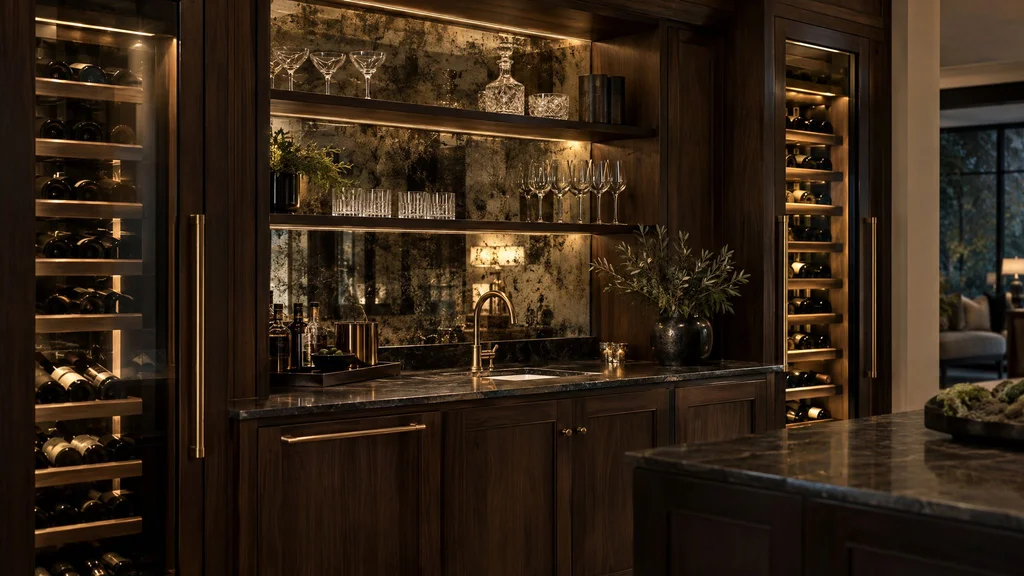
A home bar is one of the most enjoyable spaces to design. It's where the house gets a little theatrical — warm lighting, beautiful glassware, dark woods or glossy lacquer, and details that make hosting a pleasure. It's also a place where function matters: refrigeration, ventilation, plumbing, and storage all need to work seamlessly. Whether you're planning a compact beverage station or a full wet bar, here's how we approach custom bar millwork.
Define the role of your bar
Start by deciding what the bar is for. A coffee and beverage station near the kitchen needs different storage than a cocktail bar in a living room, or a full entertaining bar in a finished basement. Consider how many people you typically host, whether you mix cocktails or mostly serve wine, and whether the bar will relieve pressure on the kitchen during gatherings.
Common bar types
Beverage center
A compact built-in with a beverage refrigerator, glass storage, and a small counter. Often located between kitchen and dining or living areas, it keeps guests out of the cook's way.
Dry bar
A bar without a sink: bottle storage, glassware, a serving counter, and sometimes a small refrigerator. Easier to place anywhere, since no plumbing is needed.
Wet bar
Includes a bar sink for rinsing glasses and preparing drinks. Adds convenience and requires plumbing.
Full entertaining bar
Seating, multiple refrigeration units, an ice maker, dishwasher drawer, and extensive storage — common in finished basements and large family rooms. For basement projects, see basement finishing millwork.
Refrigeration
Refrigeration drives the layout. Options include wine refrigerators (single- or dual-zone), beverage centers for cans and bottles, undercounter refrigerator drawers, and dedicated ice makers. Each has specific dimensions and ventilation requirements — most undercounter units vent from the front toe kick, and those requirements must be respected in the cabinetry. Choose models early; cabinetry is built around them.
Wine storage
For collectors, a bar can include wine racking, display niches with integrated lighting, or even a small temperature-controlled wine closet. Bottles should be stored on their sides and away from heat and direct sunlight. For larger collections, see designing a custom wine room.
Glassware and bottle storage
Glass-front upper cabinets with integrated lighting turn glassware into display. Stemware racks, open shelves in glass or wood, and bottle display shelves with a subtle lip add drama. Closed storage below keeps bar tools, napkins, and mixers organized. Drawers with dividers are ideal for bar tools.
Bar sinks and faucets
A small bar sink — often 15 inches or so — handles rinsing glasses and bar prep. A faucet with a high arc makes filling pitchers and shakers easier. Metal finishes for the faucet should coordinate with hardware; see choosing cabinet hardware finishes.
Countertops
Durable stone or quartz handles spills. Honed marble is beautiful but etches from citrus and alcohol; many clients accept the patina, while others choose quartzite or quartz for resilience. A contrasting wood counter section can create a warm serving area.
Lighting sets the mood
Lighting is what makes a bar feel special. Integrated LED lighting inside glass cabinets, under shelves, and along toe kicks creates a warm glow. Dimmers let the bar shift from functional to atmospheric. Backlit onyx or glass panels can become a dramatic focal point. Plan lighting in the shop drawings so wiring is concealed.
Materials and finishes
Bars are a place to be bolder than the kitchen. Dark stained walnut, smoked oak, rich lacquers in deep green or oxblood, and high-gloss finishes all suit bars. Antique mirror backsplashes expand the space and reflect light. Brass and bronze details add warmth. For texture, consider fluted or reeded fronts. For our earlier guide, see bar cabinet design.
Hiding the bar
Some clients prefer a bar that disappears when not in use: pocket doors or bifold doors that conceal the bar within a wall of cabinetry, revealing it for entertaining. This is especially popular in living rooms and open-plan apartments where the bar shouldn't dominate daily life.
Ventilation and heat
Refrigeration units produce heat and need proper airflow, as specified by the manufacturer. Enclosing a unit without adequate ventilation shortens its life and can damage surrounding millwork. Consider moisture protection around the sink as well — sealed edges and water-resistant finishes.
Seating and flow
If the bar includes seating, allow roughly 24 inches of width per stool, a comfortable overhang, and clear walkways behind stools. Place the bar where guests can gather without blocking circulation.
Cost factors
Cost depends on size, materials, finishes, refrigeration and appliances, plumbing, lighting, and details like glass doors and mirror backsplashes. A compact dry bar is modest; a full entertaining bar with multiple appliances, plumbing, and lighting is a significant project. For broader context, see our custom furniture and millwork cost guide.
Bars we love to build
Bars in apartments
In New York City apartments, space is precious, so bars are often integrated into living room built-ins or a hallway niche. A shallow cabinet with a beverage refrigerator, a stone top, glass shelves, and doors that close to hide everything can deliver a surprising amount of function in a few feet of wall. Building rules may limit adding plumbing, which makes dry bars the most common apartment solution.
Coffee bars
The same principles apply to a morning coffee station: a dedicated counter for the espresso machine, an outlet hidden in the backsplash, drawers for beans and accessories, and a small refrigerator for milk. Many clients combine coffee and cocktail functions in one piece, with pocket doors to close it off. See hidden pantries and appliance garages for related ideas.
Start with how you entertain, choose your appliances early, and let the lighting and materials do the rest.
From beverage stations in Manhattan apartments to full basement bars in New Jersey homes, bars are some of our favorite projects because they combine craftsmanship, drama, and daily enjoyment. If you're dreaming of a bar, we'd love to help — call (201) 281-1457 to talk about custom furniture and built-ins.