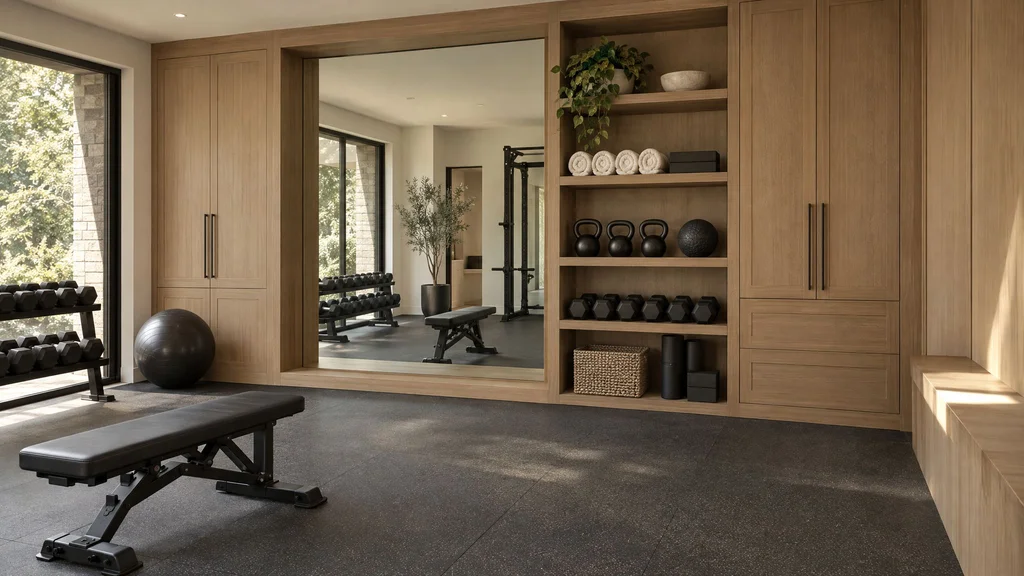
Home gyms have moved from basement afterthoughts to thoughtfully designed rooms — and custom millwork is a big part of that shift. The difference between a pile of equipment and a space you want to use is often organization and atmosphere: gear that has a place, a mirror wall that's properly framed, a bench and towel station that make the routine easy, and materials that feel warm rather than clinical. Here's how we approach home gym millwork.
Start with your training style
What you do determines what you need to store. Strength training means dumbbells, kettlebells, plates, and bars. Yoga and Pilates means mats, blocks, straps, and rollers. Cardio means space around machines. Mixed training means a little of everything. List your equipment before designing storage, and plan for what you might add.
Storage walls
A wall of custom cabinetry can hold nearly everything and keep the room calm. Closed cabinets hide clutter; open cubbies and shelves keep frequently used items within reach. Tall cabinets can house bands, rollers, and bars vertically; deep drawers hold smaller accessories. Integrated rack systems can support dumbbells and kettlebells — built to handle serious weight.
Weight storage done right
Weights are heavy and hard on materials. Shelves holding dumbbells need robust construction, thick shelf material, and secure support; floor-level storage is safest for the heaviest items. Protective surfaces — rubber-lined shelves or hardwood edge caps — reduce wear. Never store heavy weights high where they could fall. We design weight storage specifically for the loads involved.
Mirror walls
A mirror wall helps with form and makes the room feel larger and brighter. A millwork frame around the mirror — or mirror panels set between wood pilasters — gives it a finished, architectural look rather than a gym-store appearance. Mirrors must be mounted securely with appropriate hardware and safety backing.
Bench and changing area
A built-in bench gives you a place to lace shoes, stretch, and set down a bag. Storage below can hold shoes and small items. Hooks above keep towels and jump ropes handy.
Towel and hydration station
A small station for clean towels, a hamper for used ones, and water or a beverage refrigerator makes workouts smoother. A compact undercounter refrigerator for water and recovery drinks is a popular addition. See custom beverage centers for design ideas that apply here.
Media and tech
Many home gyms include a TV or screen for classes, speakers, and charging for devices. Integrating these into millwork keeps wires hidden and screens at the right height. Plan wiring before installation.
Materials that hold up
Gyms are tough environments: sweat, humidity, impacts, and heavy loads. Durable finishes, hardwearing species like white oak, and protective edges in impact zones help millwork last. Avoid delicate finishes and soft woods near equipment. Rubber or cork flooring protects floors and reduces noise. For humidity considerations, see wood movement and custom cabinetry.
Ventilation and climate
Workouts generate heat and humidity. Good ventilation — an exhaust fan, operable windows, or dedicated HVAC — keeps the room comfortable and protects millwork. This is especially important in basement gyms. See basement finishing millwork.
Layout principles
- Keep the center of the room open for floor work and equipment.
- Line walls with storage so gear lives at the perimeter.
- Place mirrors where you'll use them — facing free weight and stretching areas.
- Store the heaviest items low and near where they're used.
- Allow clearance around machines per manufacturer guidance.
Warmth and atmosphere
Wood millwork makes a gym feel like part of the home rather than a commercial facility. Warm white oak, soft lighting, and a restrained palette create a calm, motivating space. Some clients add a recovery area with a sauna or massage table — millwork can tie these zones together.
Gyms in apartments
In city apartments, a home gym might share space with an office or guest room. Cabinetry that conceals equipment behind doors lets the room transform when the workout is over. Wall-mounted, fold-down solutions keep floor space free. See closet and office combinations for related multi-use ideas.
Cost factors
Cost depends on the extent of storage walls, weight-rated construction, mirror framing, integrated appliances and media, materials, and finishes. A simple storage wall is modest; a fully built-out gym with mirror framing, a hydration station, and integrated media is a larger project.
Frequently asked questions
Can wood cabinetry really handle heavy weights? Yes, when it's designed for the load. We size shelving, supports, and fastening specifically for the weights you'll store, and keep the heaviest items at floor level.
Is a basement a good place for a gym? Often, yes — the floor is solid and noise is contained. Just plan for dehumidification and ventilation to protect the room and the millwork.
What finish is best in a gym? A durable catalyzed finish or a hard-wearing oil on white oak holds up well to sweat and cleaning.
Can a gym share space with another room? Absolutely. Cabinetry with doors can hide equipment completely, letting the room double as an office or guest room when you're done.
How much space do I need? Even a single wall of well-planned storage in a spare bedroom can make a highly functional gym; a full room lets you add mirrors, a bench, and a hydration station.
Planning checklist
- Inventory every piece of equipment you own and plan to buy.
- Note the weight of the heaviest items to size shelving correctly.
- Decide where mirrors, screens, and speakers go before wiring.
- Plan ventilation and dehumidification, especially below grade.
- Choose flooring before cabinetry so heights and bases align.
- Leave open floor space for stretching and floor work.
The result should feel less like a gym and more like a room in your home that happens to hold everything you need to train — calm, organized, and inviting enough that you actually want to use it every morning.
If you're planning a home gym in New Jersey, New York, or Connecticut, we'd be glad to design millwork that makes it a room you'll actually use. Call (201) 281-1457 to talk about custom built-ins.