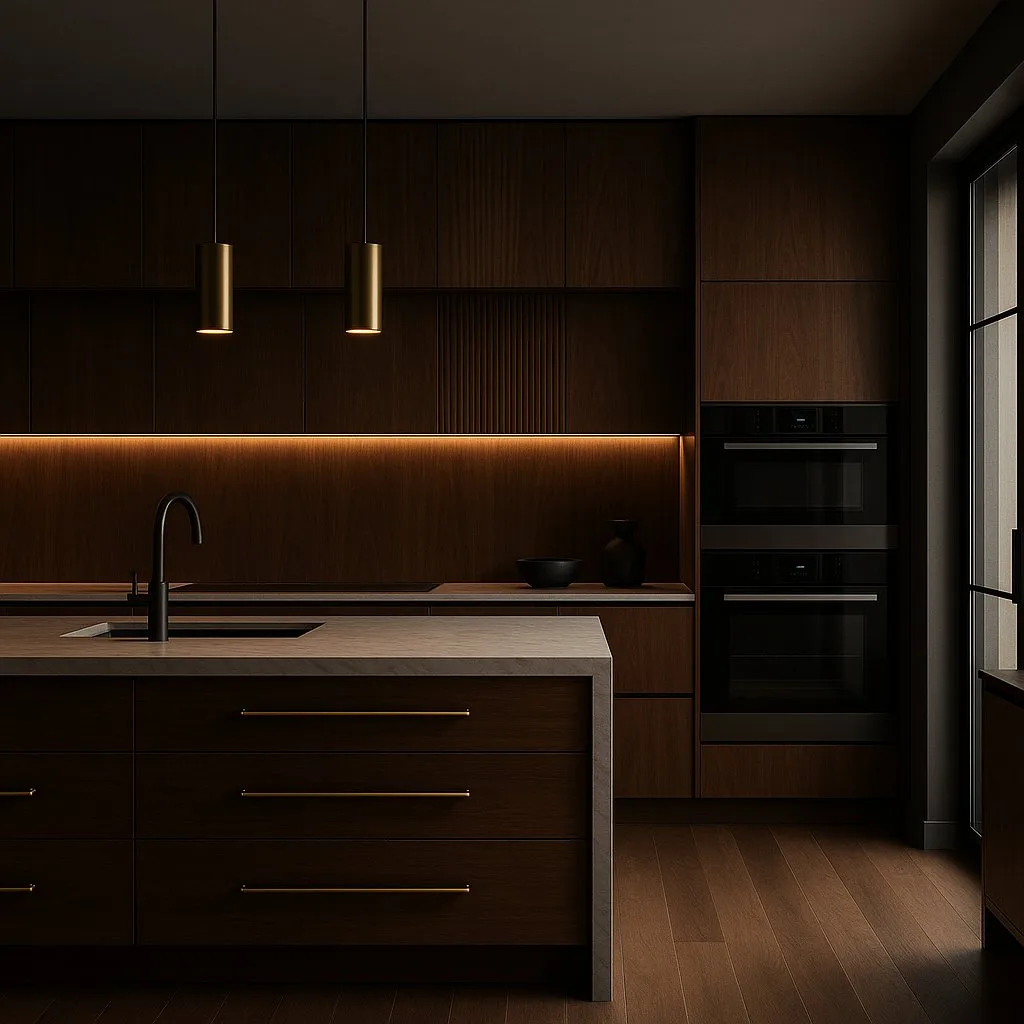
White oak has replaced walnut as the most requested hardwood in NYC luxury kitchens — and for good reason. Its color range, from pale blond to warm honey, works with a wider range of design palettes. Its grain is tight enough to read as clean and contemporary. And its hardness and stability make it an excellent performer in high-use kitchen environments.
This guide covers what white oak kitchen cabinetry actually costs in NYC, how to select grain, and what finish choices are available.
The Rise of White Oak in NYC Interiors
White oak began its current run in Scandinavian-influenced design around 2016 and has sustained its popularity for nearly a decade. It's now the dominant natural wood in new luxury development in NYC, appearing in kitchens, closets, entry millwork, and architectural paneling throughout Manhattan, Brooklyn, and the Hamptons.
Part of its appeal is versatility. Rift-sawn white oak in a natural finish pairs beautifully with black stone, warm brass, and dark matte tile. The same wood in a limed or cerused finish creates an entirely different effect — lighter, more textural, almost Scandinavian. No other readily available hardwood offers the same breadth of finished results.
White Oak Cabinet Cost Per Linear Foot
| Construction | Price per Linear Foot | Notes |
|---|---|---|
| Plain-sawn oak veneer | $1,400–$2,000 | More grain variation |
| Rift-sawn oak veneer | $1,800–$2,800 | Tight linear grain |
| Quarter-sawn with ray fleck | $2,000–$3,000 | Distinctive medullary rays |
| Cerused / limed oak | $2,200–$3,200 | Specialty finish process |
| Book-matched panels | $2,800–$3,800+ | Full grain continuity |
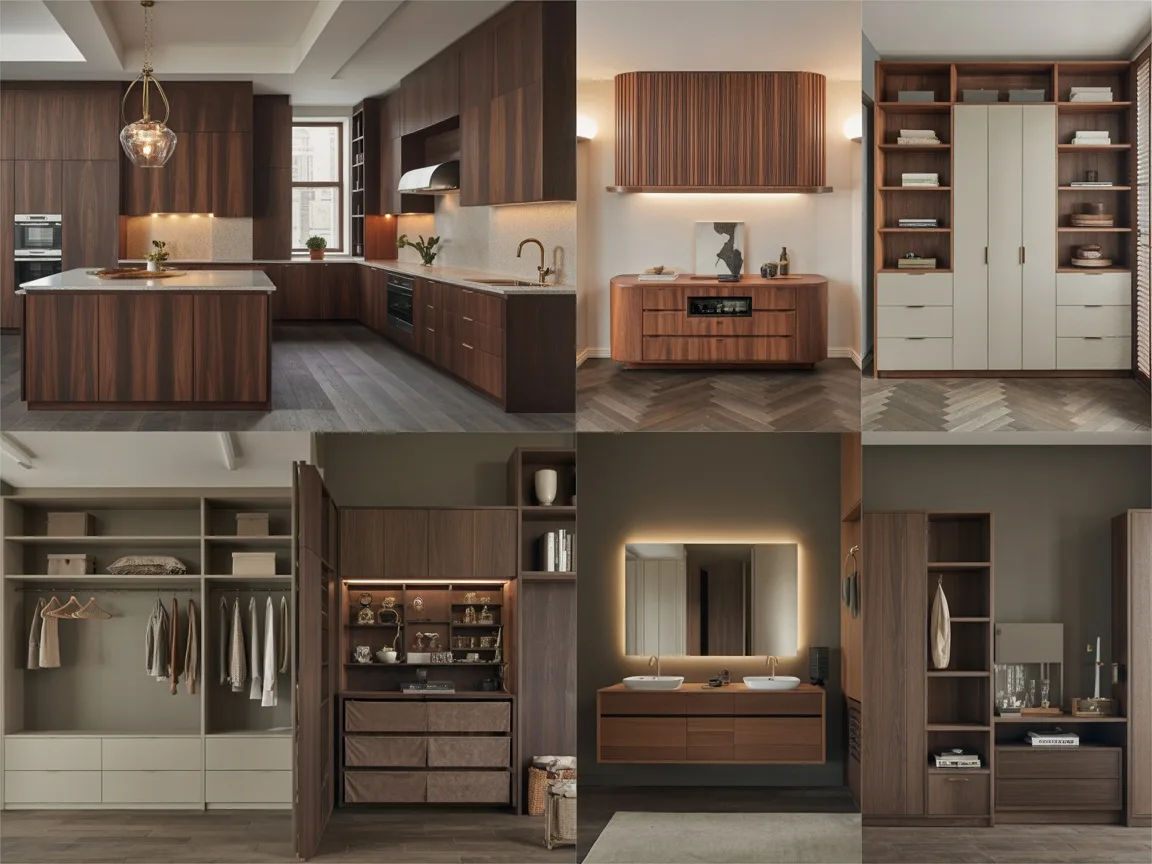
Rift-Sawn vs. Plain-Sawn White Oak
This is the single most important decision in a white oak kitchen. Plain-sawn oak shows the cathedral grain pattern — sweeping, oval-shaped growth rings — that gives the wood a natural, traditional quality. Rift-sawn produces a straight, linear grain pattern that reads as clean and contemporary.
In modern NYC kitchens, rift-sawn is almost universally preferred. It photographs better, ages more gracefully (plain-sawn cathedral grain becomes more pronounced over time in ways that some clients find dated), and creates a more consistent look across a run of cabinets.
Quarter-sawn white oak produces a distinctive third option: the medullary ray pattern that creates a subtle, almost iridescent shimmer across the surface. It's less common but visually striking, and increasingly popular in transitional design where some personality is welcome.
Finish Options: Natural, Cerused, Smoked
Natural / clear oil: Shows the wood as found, with minimal color shift. Popular in minimalist and contemporary applications. Warm but not yellow.
Cerused / limed: A white paste is worked into the open grain of the oak and then wiped back, leaving the grain channels filled with white. The result is a lighter, more textural surface that reads as sophisticated and slightly Scandinavian. Add $200–$400/LF for the cerusing process.
Fumed / smoked: Oak reacts chemically with ammonia vapor to produce a rich, gray-brown color throughout the wood fiber — not just on the surface. Fumed oak is one of the most distinctive finishes in millwork, and the color is stable and permanent. Add $300–$600/LF for fuming.
Learn about our oak kitchen work or schedule a consultation to discuss your options.