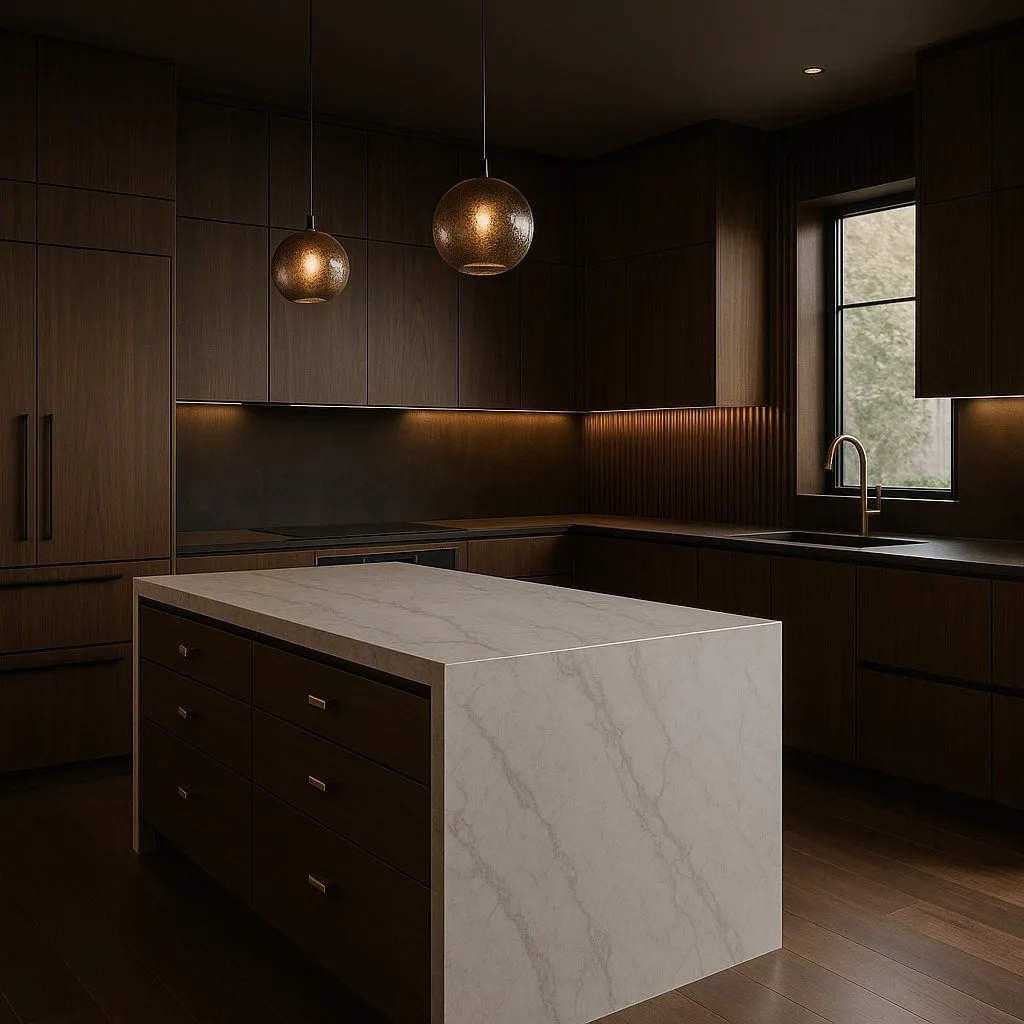
Walnut is the defining material of the current era in luxury kitchen design. Its rich brown tones, dramatic grain variation, and natural warmth create interiors that feel simultaneously modern and deeply rooted in craft tradition. In New York City, a walnut kitchen is one of the clearest signals of a serious investment in material quality.
But walnut is also one of the most misused words in kitchen marketing. Understanding what it actually means — and what you're paying for — is essential before you commit.
Why Walnut Is the Luxury Default
American black walnut has become the dominant hardwood in luxury American residential design for several reasons. Its color range — from pale sapwood to deep chocolate heartwood — is visually distinctive and impossible to replicate with paint or stain. Its grain is active but not chaotic; it reads as sophisticated rather than rustic. And it ages beautifully, darkening slightly with UV exposure and developing a patina that painted surfaces can't approximate.
In NYC kitchens specifically, walnut works particularly well in apartments with high ceilings and dark, moody aesthetic direction — the kind of interiors that pair dark cabinetry with white stone, brass, and deep gray tile. Against these materials, walnut reads as warm and grounded in a way that painted cabinetry never quite achieves.
Walnut Cabinet Pricing in NYC
| Construction | Price per Linear Foot | Notes |
|---|---|---|
| Walnut veneer over plywood | $1,600–$2,400 | Most common luxury approach |
| Rift-sawn walnut veneer | $2,000–$3,000 | Straighter grain, premium cost |
| Solid walnut face frames + veneer | $2,400–$3,500 | Furniture-grade construction |
| Book-matched walnut veneer | $2,800–$4,000+ | Matched grain panels, requires planning |
Solid Wood vs. Veneer: The Real Difference
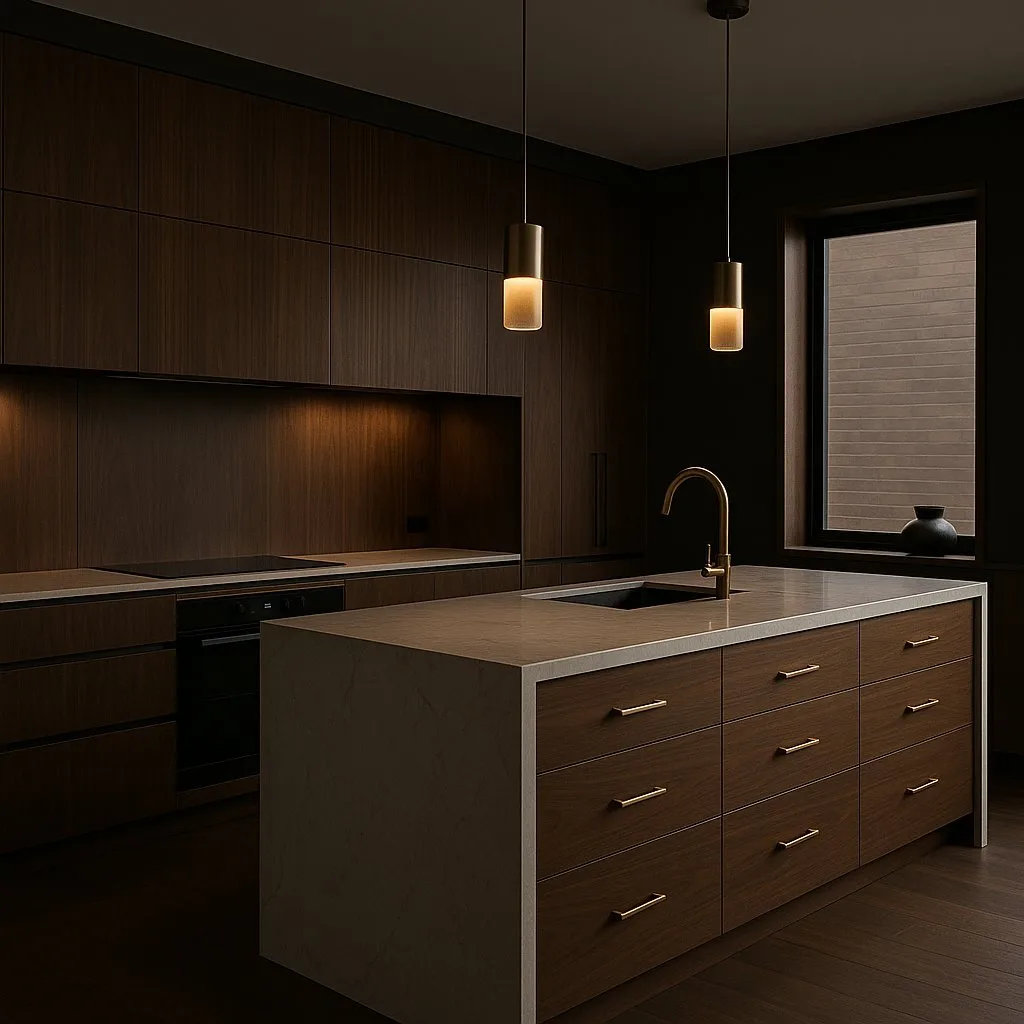
The notion that solid wood is always superior to veneer is a common misconception. In cabinet construction, premium veneer over a stable plywood substrate is often the better choice: it's more dimensionally stable in humid environments, allows for book-matching and grain continuity across panels, and eliminates the seasonal wood movement that can cause solid wood panels to crack or warp.
Solid walnut is appropriate for exposed structural elements — face frames, drawer fronts, door rails, edge banding — where its strength and workability are relevant. Veneer is appropriate for large panel faces where dimensional stability and visual consistency matter most.
Quarter-Sawn vs. Flat-Cut Walnut
Flat-cut (also called plain-sawn) walnut shows the dramatic cathedral grain pattern that most people associate with the species. Quarter-sawn and rift-sawn cuts produce a tighter, more linear grain that reads as cleaner and more contemporary. For a modern kitchen design, rift-sawn is usually the better choice. For a warmer, more traditional direction, flat-cut creates more visual interest.
Rift-sawn lumber costs 20–40% more than flat-cut due to lower yield per log and higher mill complexity. When budgeting for a rift-sawn walnut kitchen, factor this material premium into your per-foot estimate.
Finish Options and Their Cost
Walnut is almost always finished with either a clear topcoat (to show the natural color) or a light oil (to deepen the grain while remaining very natural). Fully opaque paint finishes on walnut are rare — if you're considering an opaque finish, you don't need walnut substrate and should consider painted MDF instead.
Hardwax oil finishes (like Rubio Monocoat) are popular in NYC for their matte, natural quality and easy repair. Conversion varnish or polyurethane topcoats offer greater durability for high-use surfaces. The finish choice adds $200–$500 per linear foot to fabrication cost for premium systems. See our walnut kitchen work.