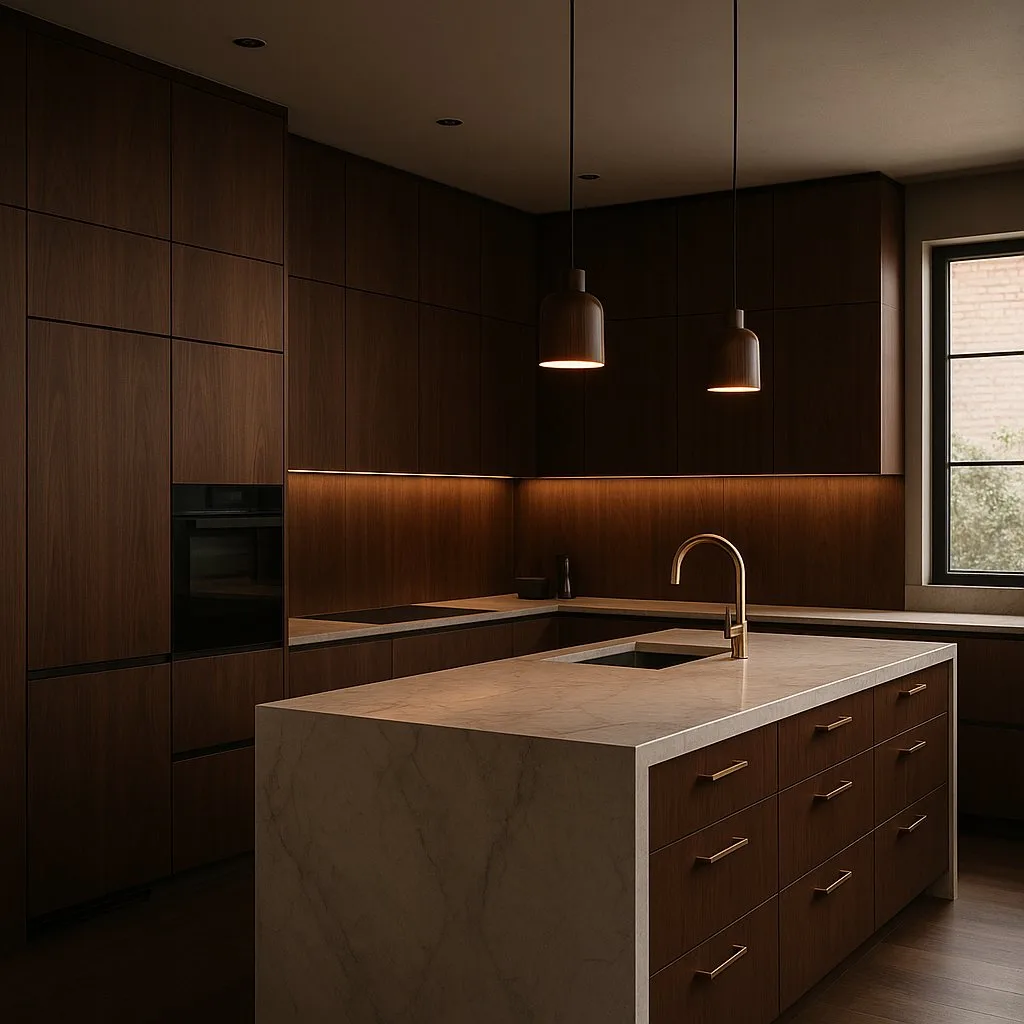
Pre-war apartments on the Upper East Side, Upper West Side, Park Slope, and throughout Manhattan and Brooklyn represent some of the most desirable real estate in New York City — and some of the most challenging environments for custom millwork. Plaster walls that are neither plumb nor square, ornate existing molding profiles that need to be matched, building restrictions on noise and work hours, and co-op board approval processes all add time and cost to millwork projects that would be straightforward in a new-construction apartment.
This guide explains why pre-war apartments cost more and what to budget for.
Why Pre-War Buildings Cost More
The primary challenge is the condition of the walls themselves. Pre-war construction used plaster on lathe, which is harder and more brittle than modern drywall, and which was applied by hand. No two walls in a pre-war apartment are exactly plumb or exactly parallel. A 10-foot run of cabinets that would install in 4 hours in a new-construction apartment can take 8–12 hours in a pre-war building because every panel, filler, and scribe has to be custom-fitted to the actual wall conditions.
Add 15–25% to your millwork budget for pre-war installation complexity. In extreme cases — severely raked walls, multiple out-of-square corners, plaster that requires patching around new millwork — the premium can reach 30%.
The Out-of-Square Problem
In a pre-war building, assume that no walls are square, no floors are level, and no corners are 90 degrees. A good millwork studio will take detailed site measurements at multiple points along every wall run, note the deviations, and design the millwork to read as flush and plumb even when the surrounding surfaces are not.
This requires scribing — shaping the edges of panels and filler pieces to fit the exact contour of the adjacent surface — and custom-fit reveals and trim at every transition. It's more labor-intensive than new construction work and requires more experienced installation crews.
Board Approval and Lead Times
Co-op boards in NYC can require weeks to months of approval process before major renovation work begins. Most boards require alteration agreements, insurance certificates, contractor vetting, and sometimes architectural drawings stamped by a licensed PE or architect.
For millwork projects, this typically adds 4–8 weeks to the schedule and sometimes requires that the millwork studio provide additional documentation (shop drawings, material specifications) to satisfy board requirements. Budget $2,000–$5,000 in administrative costs for board-intensive buildings — including any drawing preparation your board requires.
Building Restrictions That Affect Millwork
Many NYC buildings restrict work hours to Monday–Friday, 8am–5pm or 9am–5pm. This is typically not a problem for millwork installation, but it can extend the project timeline if multiple trades are competing for access to the space.
Freight elevator reservations, padding and protection requirements in lobby areas, and material staging limitations are all building-specific and should be clarified with your building manager before scheduling your installation. Some buildings charge fees for freight elevator use or require a certificate of insurance from every subcontractor.
Budgeting for Pre-War Projects
The standard advice is to add a 20% contingency to any millwork budget in a pre-war NYC apartment. Conditions discovered during demolition or site measurement often reveal additional complexity — pipes running through walls where millwork was planned, structural elements that need to be worked around, or existing molding profiles that need to be matched or continued.
Work with a millwork studio that has specific experience in pre-war buildings. Ask to speak with previous clients who had work done in co-ops or condos with similar vintage. The difference between a studio that regularly works in pre-war environments and one that doesn't is significant and worth the extra diligence. Get in touch to discuss your apartment.