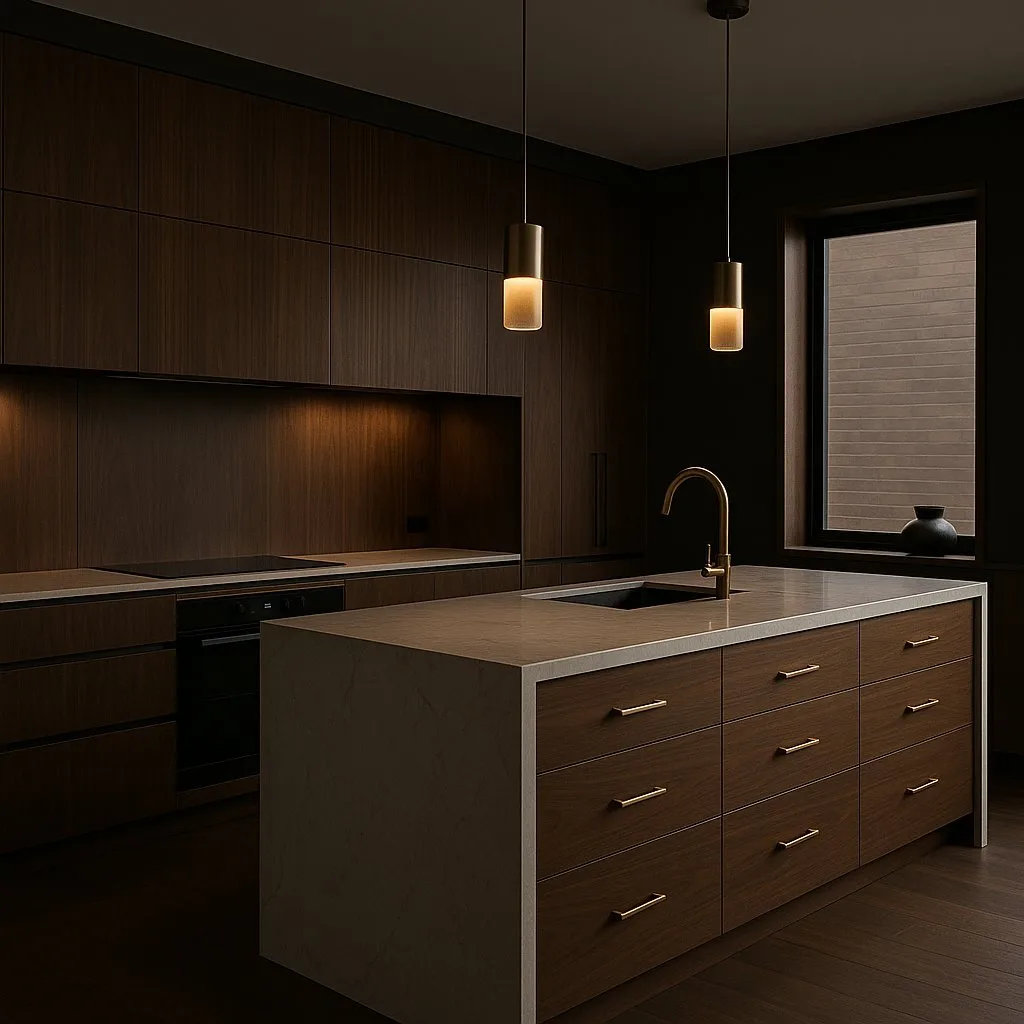
Linear footage is the standard pricing unit for custom millwork — and understanding what it means, and why different categories cost what they do, is essential before you start collecting quotes. This guide covers every major millwork category with real 2025 NYC pricing.
Why Linear Foot Pricing?
Millwork pricing is primarily a function of material and labor — both of which scale with the length of a run. A 20-foot kitchen has roughly twice the material and installation cost of a 10-foot kitchen, assuming the same height, configuration, and finish. Linear foot pricing makes this scaling intuitive and allows meaningful comparison between quotes.
Not everything quotes by the linear foot — islands, vanities, and freestanding pieces are often quoted as units. But for built-in runs, LF is the industry standard.
Millwork Pricing by Category (2025)
| Category | Low | High | Notes |
|---|---|---|---|
| Kitchen cabinetry | $1,200/LF | $4,500/LF | Excl. countertops & appliances |
| Walk-in closet | $700/LF | $3,500/LF | Per wall run |
| Wall paneling | $400/LF | $2,200/LF | Full-height, installed |
| Built-in bookcases | $600/LF | $3,000/LF | Floor-to-ceiling |
| Wainscoting | $300/LF | $1,800/LF | 42"–54" typical height |
| Bathroom vanity | $8,000/unit | $40,000+/unit | Per vanity unit |
| Entertainment wall | $800/LF | $3,500/LF | Includes TV integration |
| Home office built-in | $700/LF | $2,800/LF | Desk + shelving + filing |
| Commercial millwork | $800/LF | $4,000/LF | Bars, reception desks, retail |
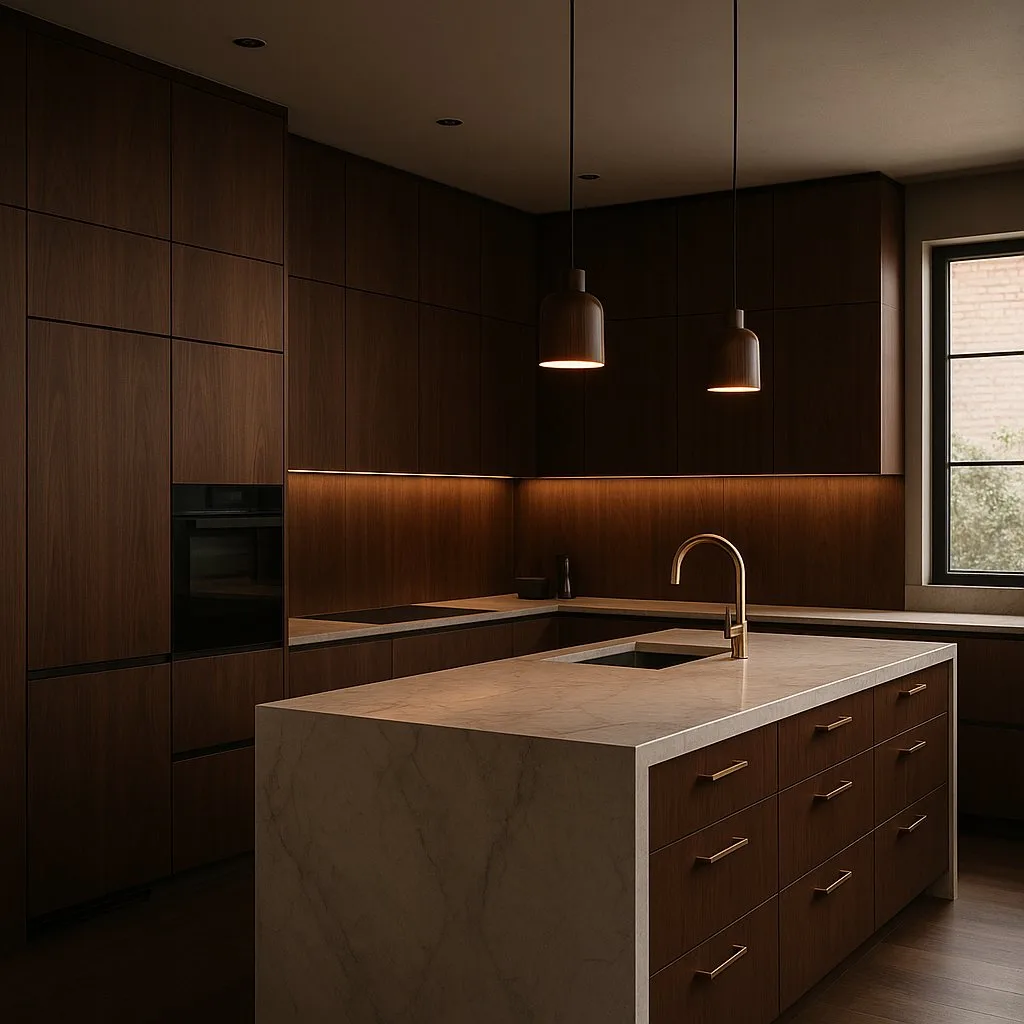
What Drives NYC Prices Higher Than National Averages
NYC millwork prices run 30–60% higher than national averages for several structural reasons. Labor costs are the biggest factor — skilled finish carpenters in the NYC metro earn $95–$140 per hour, compared to $55–$85 in most other major cities. Logistics add cost: elevator reservations, DOB permit requirements in some buildings, parking and staging limitations, and the challenge of moving large millwork components through tight building corridors.
Building-specific requirements also add cost. Many co-ops require board approval, which adds 4–8 weeks to the schedule and sometimes requires additional documentation or insurance. Pre-war buildings with plaster walls and out-of-square conditions require more scribing and custom fitting than new construction.
Finally, NYC client expectations drive quality thresholds upward. A renovation that's considered high-end in Westchester or New Jersey may be considered standard in a Central Park West apartment. The baseline level of finish, material selection, and detail work expected by NYC clients is simply higher than in most other markets.
How to Read a Millwork Quote
A well-structured millwork quote should itemize: design and documentation fees (if any), material costs by component, fabrication labor, finishing, delivery, and installation. Watch for quotes that bundle everything into a single per-foot number without a breakdown — these are harder to compare and easier to manipulate.
Always ask what's excluded. Countertops, appliances, plumbing rough-in, electrical, and permits are almost always excluded from millwork quotes. Understanding the full project cost requires getting those numbers too.
Getting Value Without Sacrificing Quality
The most reliable way to get value in custom millwork is to choose your material tier deliberately. A painted MDF kitchen at $1,800 per linear foot, executed by a skilled shop with proper finishing, will look better than a "walnut" kitchen at $1,400 per linear foot from a shop cutting corners on material sourcing and surface prep.
Prioritize the elements that matter most. Drawer slides and hinges affect daily experience — don't value-engineer these. The species of secondary interior components matters less than the faces and the finish. Reach out to discuss your project scope.