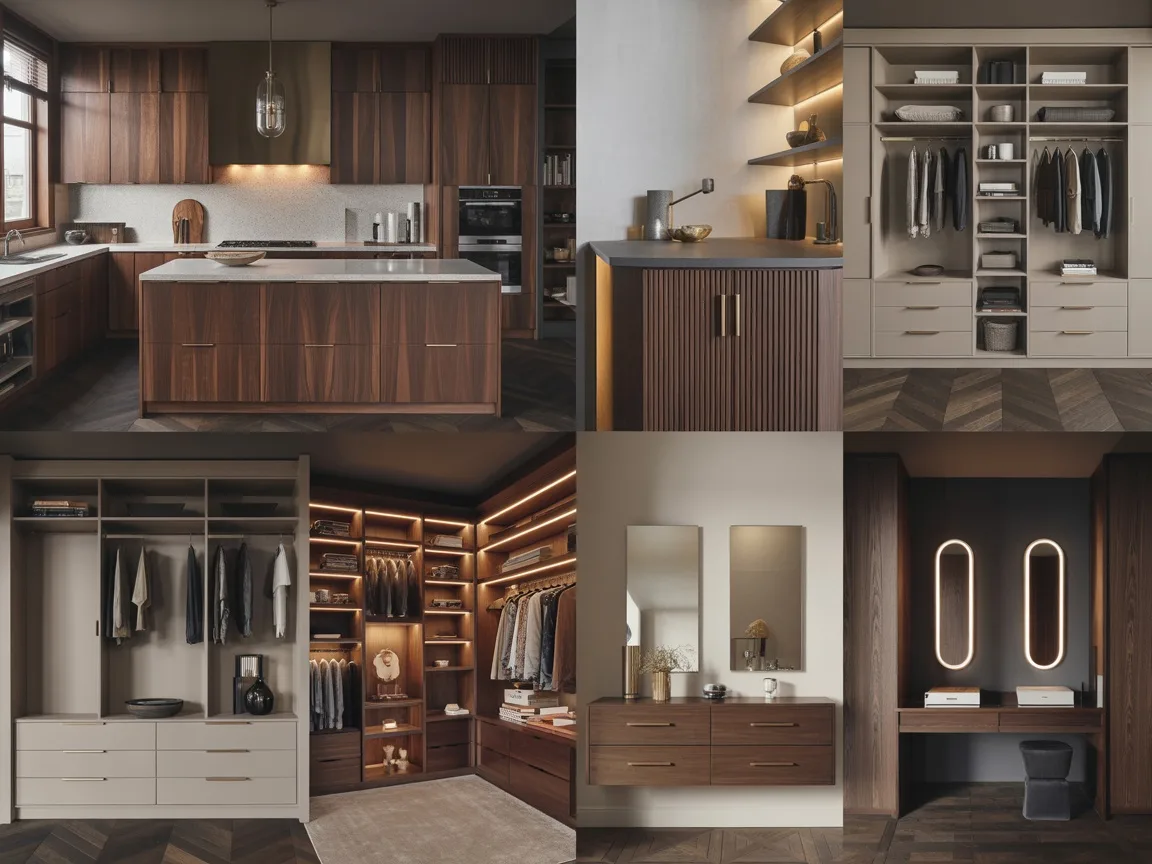
Custom millwork is typically one of the top three budget line items in any significant NYC renovation — behind general contracting and often ahead of stone. Getting the budget right requires understanding not just the per-linear-foot cost of your millwork, but the full scope of what you're buying, what's excluded from every quote, and where projects consistently go over budget.
This guide is written for homeowners who are starting to plan a custom millwork project and want to approach the budget conversation with clarity.
Start With Scope, Not Budget
The most common budgeting mistake is assigning a number to a project before defining what the project actually is. "A kitchen renovation" is not a scope. "A fully custom kitchen with 22 linear feet of white oak cabinetry, a 5×3 island with marble top, integrated paneling on the range wall, and a custom hood" is a scope — and it leads to a far more accurate estimate.
Before you contact a millwork studio, make a list of every element you're considering. Be specific about which walls are getting cabinetry, what height, what material direction, and whether the project includes any architectural millwork (paneling, built-ins, coffered ceiling) beyond the kitchen or closet itself. The more specific you are, the more useful the estimate you receive will be.
How to Read a Millwork Quote
A professional millwork quote should itemize: design documentation fees (if any), material cost by component or room, fabrication labor, finishing labor, delivery and logistics, and installation labor. Look for specifics — "kitchen cabinetry, 22 LF, white oak veneer, rift-sawn, painted interiors" — rather than bundled totals that obscure what's actually included.
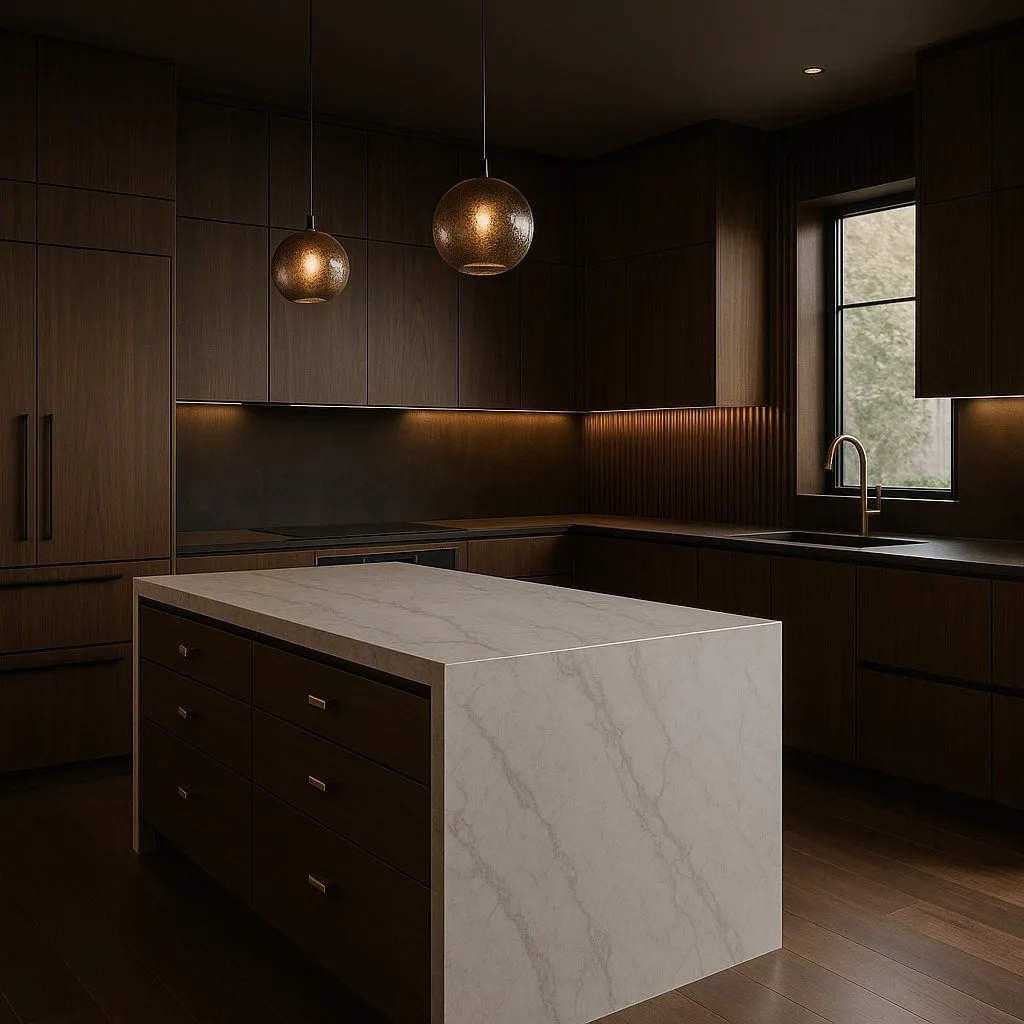
Always ask for a scope exclusions list. Professional studios will list what's not included: countertops, appliances, plumbing, electrical, lighting fixtures, permits, and sometimes under-cabinet lighting. These exclusions can add $40,000–$80,000 to a kitchen project budget and need to be tracked separately.
Hidden Costs Everyone Forgets
Countertops: Budget $120–$300 per square foot for premium stone in NYC. A 20 SF island top at $200 per square foot is $4,000 — and that's before fabrication and installation.
Appliance panels: Integrated refrigerator and dishwasher panels are part of the millwork scope but are sometimes excluded from quotes that specify "cabinetry only." Clarify this upfront.
Touch-up and snag work: In NYC apartments, a millwork installation almost always involves a second trip to address touch-ups, hardware adjustments, and finish repairs. This is standard — budget $1,500–$3,000 for a typical kitchen project.
Delivery and freight: Delivering large millwork components to a Manhattan apartment building is more expensive and complex than it sounds. Freight elevator reservations, protection requirements, and restricted delivery windows add cost. Some studios include this; others don't.
The 15% Contingency Rule
Plan a 15% contingency on your millwork budget for a new-construction project and 20–25% for a pre-war renovation. This isn't pessimism — it's the result of what reliably happens in NYC construction. Conditions discovered during demolition, design changes during the approval process, and out-of-square walls that require additional fitting work are all normal and expected. Having the contingency available is what separates projects that finish well from projects that finish stressed.
Questions to Ask Every Millwork Studio
Ask: Who owns the studio and who will be on site during installation? How long has the shop been operating? Can I visit the shop during fabrication? Who are three recent clients I can call? What is your current lead time from signed contract to installation? What happens if my building board has concerns about your insurance or documentation? The answers to these questions will tell you more about a studio's professionalism than their portfolio.
Reach out to discuss your project budget — we're happy to help you scope accurately.