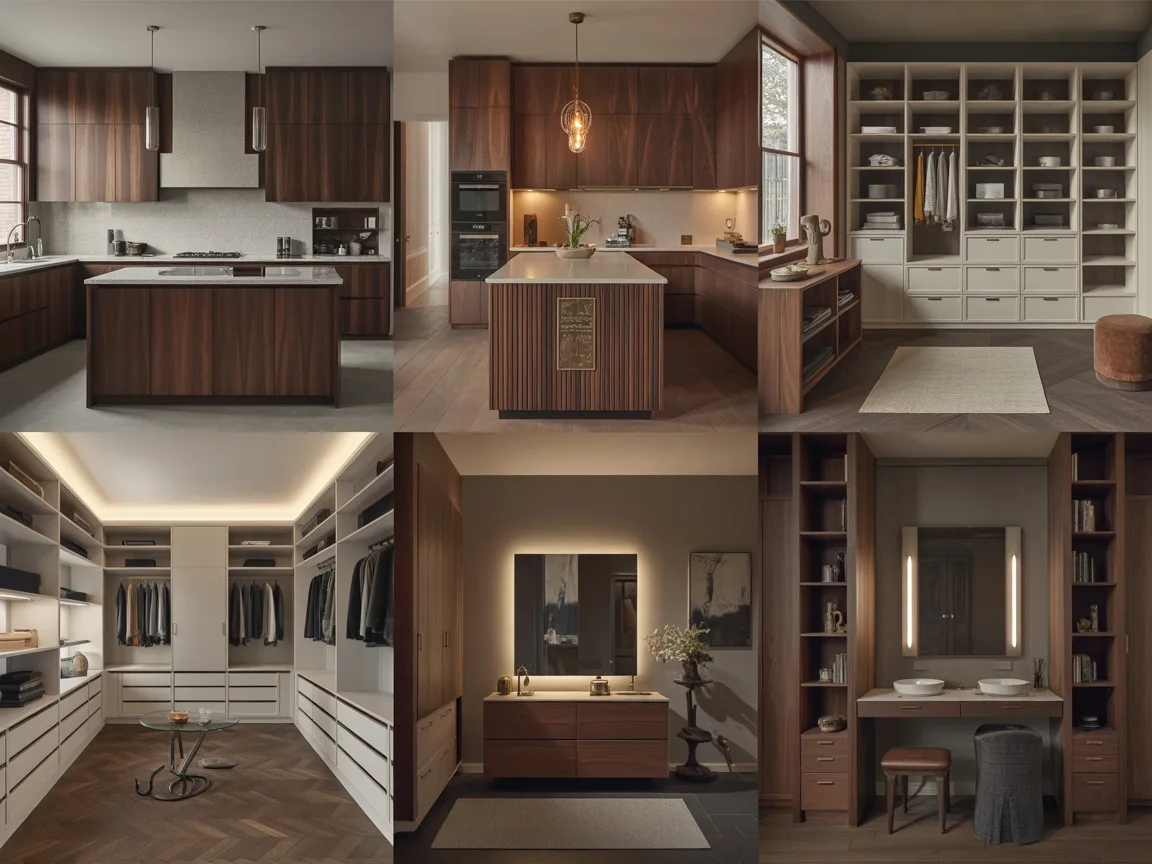
Luxury walk-in closets in New York City occupy a unique category of residential design — part functional storage, part personal sanctuary, and increasingly, part real estate amenity. The range in this market is enormous: $50,000 will buy an excellent custom closet in quality hardwood; $300,000 will buy a fully appointed dressing room that functions as a destination room in its own right.
This guide maps that range in detail and explains what actually changes — materially, mechanically, and experientially — at each tier.
What Makes a Closet "Luxury"?
A luxury closet isn't simply an expensive one. It's one where the construction quality, material selection, finish consistency, lighting design, hardware specification, and design intelligence are all operating at the same level. A closet with walnut cabinetry and cheap drawer slides is not a luxury closet. A closet with painted MDF and exceptional Blum hardware, properly lit, is closer to luxury than most people expect.
True luxury also includes personalization — a system designed specifically for your wardrobe, not adapted from a standard configuration. That means mapping your actual storage needs (how many suits, how many folded items, how many long dresses, how many shoes) before designing a single shelf.
The $50,000–$80,000 Closet
At this tier, expect a fully custom white oak or painted closet with quality Blum or Grass drawer systems, adjustable shelving throughout, integrated LED strip lighting in the hanging sections and upper cabinets, proper curated hardware, and a center island in matching material. This is a closet that will impress any interior designer and satisfy any homeowner — it simply lacks the extra layer of bespoke detail that higher budgets deliver.
The $80,000–$150,000 Closet
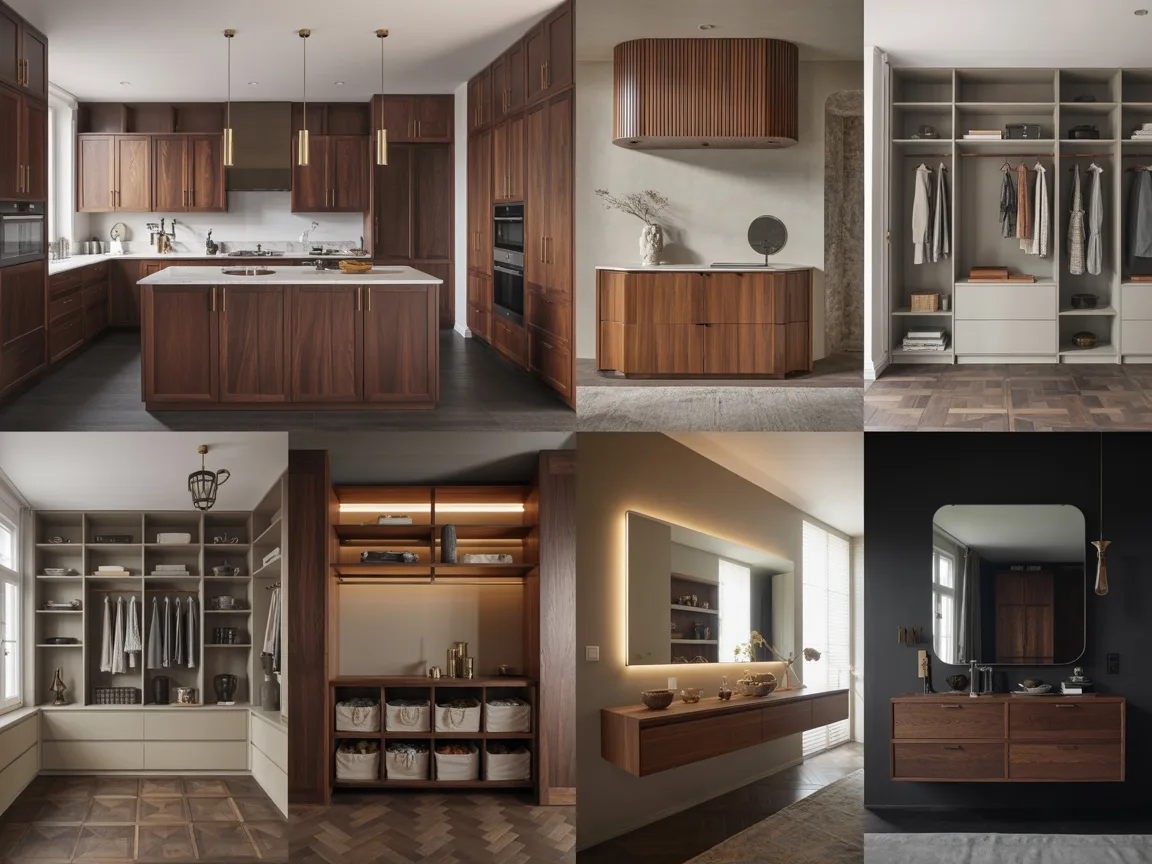
This is where European-quality construction becomes standard. At this level, expect full-extension drawers with dovetail hardwood drawer boxes, lacquered interiors (in a contrasting or matching color), glass-front upper cabinets with integrated lighting, a stone-topped island, custom pull hardware in solid brass or blackened steel, motorized accessories like tie racks or belt racks, and a designed lighting plan with multiple zones and dimmers.
The difference in experience between a $60,000 and a $120,000 closet is not subtle. At $120,000, you're working in a room that feels like a boutique. Every drawer opens perfectly. Every surface is flawlessly finished. The lighting is warm and flattering. The hardware catches the light and reminds you that the details were chosen, not specified.
The $150,000–$300,000+ Closet
At this level, the closet is architecture. It may include: custom millwork that integrates seamlessly with architectural details (coffered ceiling that continues the closet's grid, wall paneling that transitions into the cabinetry), premium stone island tops in book-matched marble or quartzite, motorized mirror systems, fully integrated sound, custom veneer patterns with book-matching and grain continuity across full walls, and hardware custom-fabricated to the designer's specification.
These projects typically involve an interior designer, a millwork studio, an electrician, and a lighting designer working in coordination over 6–12 months. The result is a room that photographs for design publications and sells apartments. Explore our closet work.