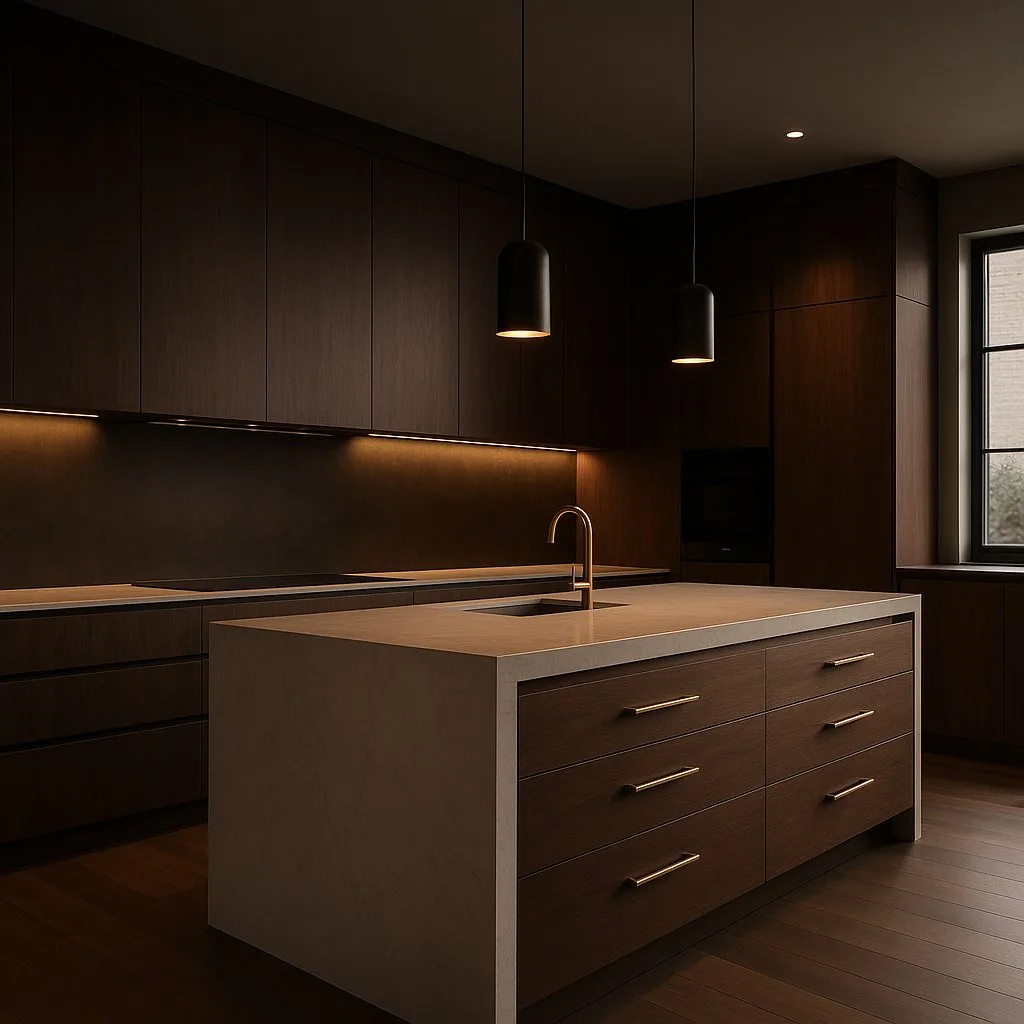
The choice between inset and overlay cabinet construction is one of the most significant decisions in a custom kitchen project — and one of the least understood by most homeowners. It affects not only the aesthetic character of the kitchen but also the cost, the construction timeline, and the quality requirements placed on the millwork shop. Here's what you need to know.
What Is an Inset Cabinet?
An inset cabinet has its door set flush within the face frame opening — rather than overlapping it. When you look at an inset kitchen, you see the face frame as a visible grid of horizontal and vertical elements, with the doors and drawer fronts set into that grid like picture frames. The reveals — the thin gap between the door edge and the face frame — are typically 1/16" to 3/32".
Inset construction is the traditional American cabinetry form. It appears in historically accurate renovations of pre-war apartments and traditional houses, but it's also found in contemporary kitchens where the flush, planar quality of the face frame grid is valued for its own aesthetic character.
Why Inset Costs More
Inset construction is more expensive for three reasons. First, the tolerances are tighter — the door has to fit the opening precisely, which requires more accurate cutting and fitting than overlay work. Second, the adjustment range is limited — a full-overlay door hides manufacturing variation; an inset door reveals it. Third, any building movement or humidity-related wood movement that affects the cabinet box will show up as an uneven reveal on an inset door, requiring readjustment.
A quality inset kitchen requires a shop with consistent machinery, experienced craftspeople, and a quality-control process that checks every door before shipment. These shops cost more to run and charge accordingly.
Overlay Cabinet Pricing in NYC
| Door Style | Overlay | Inset Premium |
|---|---|---|
| Painted MDF flat panel | $1,200–$1,900/LF | +20–30% |
| Painted shaker | $1,400–$2,200/LF | +25–35% |
| White oak veneer | $1,800–$2,800/LF | +30–40% |
| Walnut veneer | $2,000–$3,200/LF | +30–40% |
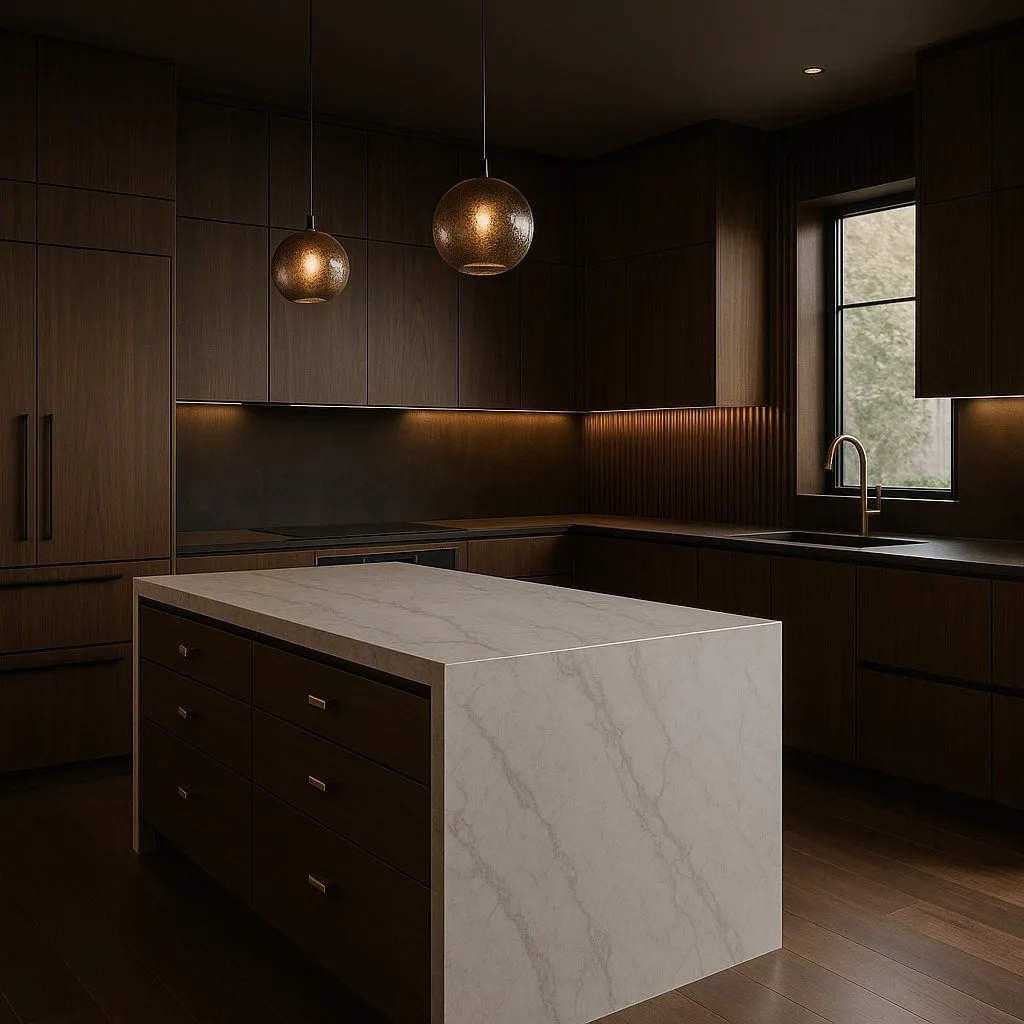
Full-Overlay: The Middle Ground
Full-overlay construction — where the door overlaps nearly the entire face frame, leaving only a thin gap between adjacent doors — is the dominant approach in contemporary European-style kitchens. It reads as clean, modern, and frameless even when there is technically a face frame behind the doors.
Full-overlay is less expensive than inset and more contemporary in character. For a kitchen with flat-panel or handleless doors, full-overlay almost always reads better than inset, which can look out of period in a very contemporary context.
Which to Choose for Your Home
Inset is right for: traditional or transitional interiors; pre-war apartments where the building's architecture calls for a more classically American kitchen aesthetic; and any kitchen where the face frame grid is intended to be a visible design element.
Full overlay is right for: contemporary and minimalist kitchens; European-influenced design; and any kitchen where the goal is visual simplicity and a recessive cabinet presence. Inset is the more expensive choice and the more forgiving to live with — the face frame absorbs minor variations in alignment that full overlay makes visible. Discuss your kitchen design with us.