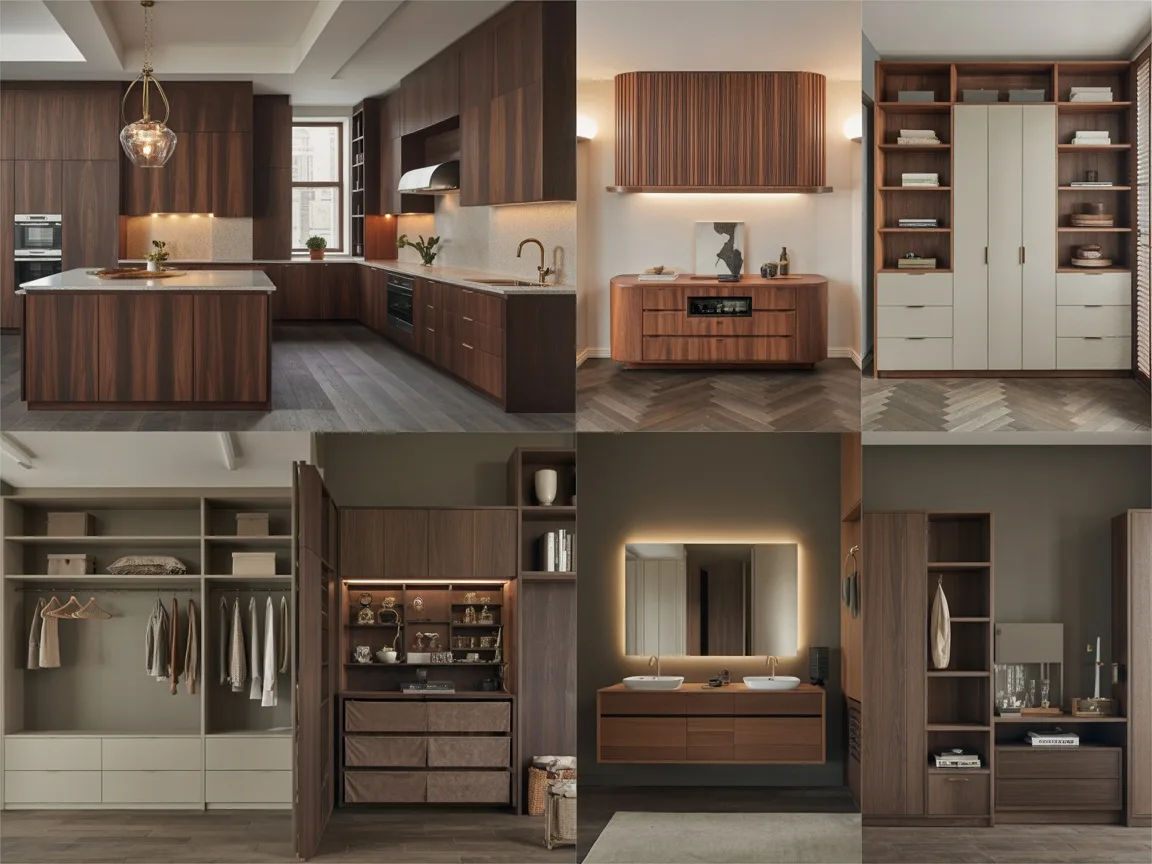
The line between custom furniture and architectural millwork has blurred considerably in contemporary NYC interiors. A floating console table that's attached to the wall — is it furniture or millwork? A kitchen island with furniture-quality joinery and a stone top — is it a piece of furniture or a cabinet? The answer matters because it affects how the piece is priced, installed, and thought about over time.
This guide compares custom furniture and built-in millwork in terms of cost, value, and use case — and helps you decide which approach makes more sense for your specific needs.
Custom Furniture vs. Built-Ins: What's the Difference?
The defining distinction is whether the piece is attached to the building or freestanding. Built-in millwork — bookcases, kitchen cabinets, closets, vanities — is part of the architecture. It adds to the value of the apartment, transfers with the sale, and is typically permitted as part of a renovation. Custom furniture is a movable asset — you own it, you take it with you, and it doesn't affect your building board approval process.
The practical design implication is that built-ins are designed for the specific space they occupy, while custom furniture is designed to function in multiple contexts even if it's intended for one specific location.
Dining Table Cost in NYC
A custom dining table from a quality NYC studio runs $4,000–$18,000 depending on species, size, and design complexity. A solid walnut dining table in a live-edge or designer slab format — 84"×40" — typically runs $6,000–$12,000. A fully designed architectural table with integrated extension mechanism, book-matched top, and architectural base can reach $15,000–$25,000.
The premium over a comparable design-forward production piece (from a brand like Arteriors or RH) is significant — but so is the distinction. A custom table is made once, for you, in the species and dimensions you specify. It has no equivalent in any catalog.
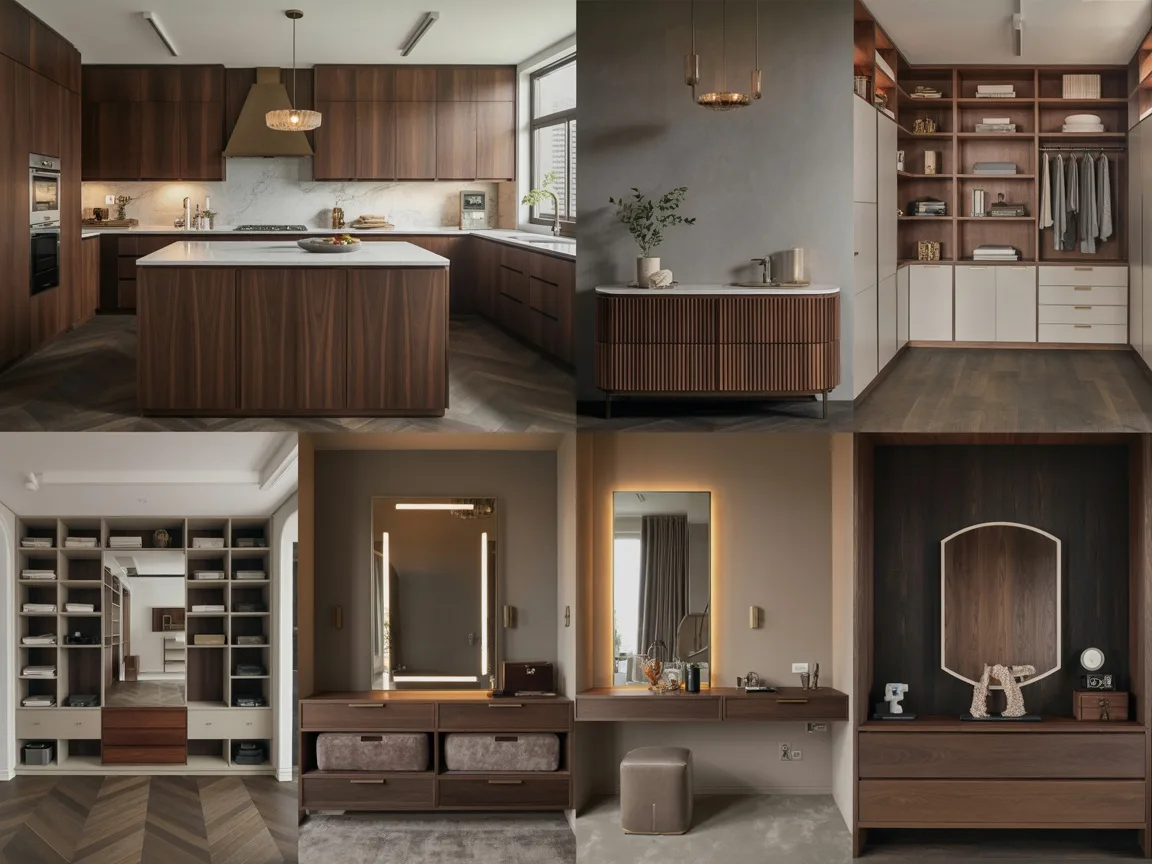
Console Tables and Entry Pieces
A custom entry console from a quality studio runs $3,000–$8,000. This is actually one of the most cost-effective applications of custom work — the piece is simple in construction but visible from the moment anyone enters your home, and the right console in the right material sets a tone for the entire interior.
Custom consoles also allow for exact dimension control: a 60"-wide console that fits the exact wall width between your entry doorway and your coat closet is a different object than a standard 48" console flanked by empty wall. That level of precision is what custom work delivers.
When Built-In Millwork Beats Furniture
Built-in millwork beats freestanding furniture in several situations. When storage is the primary need, built-ins maximize usable space in a way furniture can't — floor-to-ceiling shelving built into a wall creates 50–70% more storage than a bookcase of the same footprint. When architectural integration matters — a library wall that relates to the room's molding profile, a kitchen that continues paneling around a corner — only built-in work can achieve the result. And when you're planning to stay in the apartment for more than 5 years, the value added by built-ins in an NYC co-op or condo is real and measurable.
Freestanding custom furniture is the better choice when you're in a rental, planning to move within a few years, or need a piece that will anchor multiple spaces over time. See our custom furniture work.